Sports Entertainment
Chairshot Top 5: Best Wrestling Names of All Time
From Stone Cold Steve Austin to Macho Man Randy Savage, these five wrestling names perfectly matched the legends who made them famous.

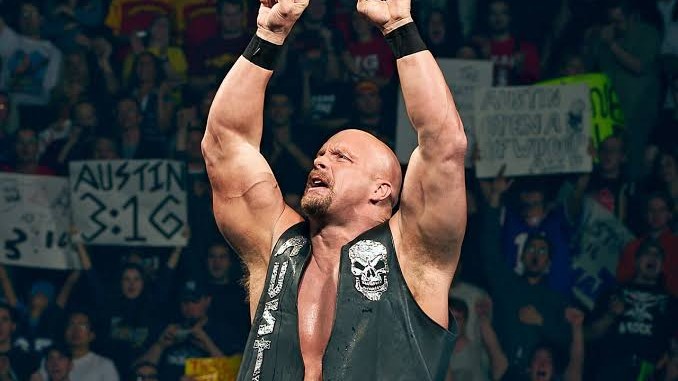
From Stone Cold Steve Austin to Macho Man Randy Savage, these five wrestling names perfectly matched the legends who made them famous.
A great wrestling name can explain a character before the wrestler ever throws a punch. From Jake “The Snake” Roberts to “Stone Cold” Steve Austin, these names became so perfectly attached to the performers behind them that imagining anything else feels almost impossible.
Professional wrestling has introduced thousands of characters, and a surprising number of them were fighting an uphill battle before they ever stepped through the curtain. A weak ring name can make a serious wrestler sound ridiculous, make a dangerous wrestler seem harmless or force a performer to spend months overcoming something the audience decided it hated within seconds.
The best wrestling names work in the opposite direction. They create an image immediately, sound right when shouted by an announcer and become stronger as the wrestler builds history around them.
Some names describe the character directly. Others simply have the right rhythm, combination of sounds or attitude. In the rarest cases, the name becomes so closely associated with one wrestler that the words themselves stop meaning anything else inside professional wrestling.
This ranking is not simply a list of the biggest stars with memorable names. Hulk Hogan, Ric Flair, The Rock and countless others could easily be part of the conversation, but the standard here is how effective the actual wrestling name is: how it sounds, how naturally it fits the performer and whether changing even one part would make it worse.
These are the Top 5 best wrestling names of all time.
5. Jake “The Snake” Roberts
Some wrestling names are clever. Jake “The Snake” Roberts is better than clever because it is almost absurdly simple.
The rhyme makes it immediately memorable, but the name became great because everything Jake Roberts did seemed designed to prove that “The Snake” was not merely a convenient nickname. He moved deliberately, spoke quietly and rarely wasted energy. His interviews felt less like wrestling promos than warnings delivered by somebody who already knew how the situation would end.
Then there were the actual snakes.
Roberts carried Damien to the ring in a burlap sack after joining WWE in 1986, later using other snakes as the character grew darker. That could have turned the nickname into a cartoon, but Roberts had enough menace to make the presentation feel dangerous rather than silly.
The name also worked on several levels. A snake could be patient, deceptive and dangerous, which described Roberts better than simply naming him after an animal because he happened to carry one. His entire approach to wrestling psychology relied on waiting for opponents to make mistakes and then striking suddenly with the DDT.
There is also something important about the ordinary-sounding “Jake Roberts” surrounding the nickname. He was not The Serpent King or some elaborate reptile-themed creation. He sounded like a real person who had earned an unsettling nickname somewhere along the way.
That helped the character survive changing eras. Remove the python, the Snake Pit and the 1980s WWE presentation, and Jake “The Snake” Roberts still sounds like somebody worth paying attention to.
Plenty of wrestling nicknames rhyme. Very few became this inseparable from the person wearing them.
4. “Rowdy” Roddy Piper
“Rowdy” Roddy Piper is the kind of wrestling name that almost sounds too perfectly constructed to belong to a real person.
The repeated R sounds make it roll naturally off the tongue, while “Rowdy” tells the audience everything important before Piper says a word. This is not a calm technician arriving for a sporting contest. Something is probably going to happen.
That promise followed Piper everywhere.
Whether he was antagonizing crowds in the territories, verbally attacking opponents on Piper’s Pit or becoming one of Hulk Hogan’s defining enemies during WWE’s national expansion, Piper behaved exactly like somebody who should be called Rowdy. The nickname did not require explanation because he spent decades demonstrating it.
“Roddy Piper” by itself would already be a strong wrestling name. Adding “Rowdy” turns it into something with rhythm, identity and personality.
The name also benefited from Piper’s ability to make chaos feel spontaneous. Many wrestlers receive aggressive nicknames because promoters want them to seem dangerous. Piper seemed to create situations that justified his nickname retroactively every time he appeared.
That authenticity is one reason the name became transferable in a way most wrestling identities never do. When Ronda Rousey entered combat sports and eventually professional wrestling using “Rowdy,” she sought Piper’s blessing because the nickname already belonged to a specific wrestling legacy.
That says something about the strength of the original. “Rowdy” is an ordinary word, but attached to Roddy Piper it became intellectual property in the minds of wrestling fans without needing a trademark symbol beside it.
3. The Undertaker
The Undertaker might be the greatest example of an extremely literal wrestling name becoming something far larger than its original concept.
When the character debuted at Survivor Series in 1990, the presentation was straightforward. He dressed like an Old West mortician, moved slowly, barely reacted to pain and was eventually paired with a manager named Paul Bearer. Calling him The Undertaker required almost no imagination.
That simplicity became its greatest strength.
There is no first name, last name or elaborate nickname attached to it. He is simply The Undertaker, which gives the character the feeling of a title rather than an identity.
As the presentation evolved, the name proved flexible enough to survive changes that would have killed most gimmicks. The Undertaker moved from Western mortician to supernatural Deadman, became darker and more gothic, transformed into the motorcycle-riding American Bad Ass and eventually returned to the supernatural presentation that defined the final portion of his career.
The name somehow worked through all of it.
That adaptability matters because gimmick-specific names usually have an expiration date. Once the original costume or concept becomes outdated, the performer either changes identities or spends the rest of a career explaining why the old name still applies.
The Undertaker never faced that problem because the name eventually stopped describing his profession and started describing him.
Wrestling fans did not hear “undertaker” and picture a funeral director. They pictured the wrestler.
Very few performers have ever taken a common word and claimed ownership of it that completely.
2. “Stone Cold” Steve Austin
Steve Austin already had a perfectly respectable wrestling name. Then WCW turned him into “Stunning” Steve Austin, WWE briefly called him The Ringmaster, and the performer who would eventually define an era spent several years circling the identity that should have been obvious only after someone finally discovered it.
“Stone Cold” changed everything.
According to Austin’s account, the phrase emerged after his then-wife told him to drink his tea before it became stone cold. WWE had previously suggested names including Ice Dagger and the now-infamous Chilly McFreeze while searching for something that fit Austin’s colder personality.
The difference between those names explains why naming wrestlers is harder than it appears.
Ice Dagger sounds manufactured. Chilly McFreeze sounds like a mascot. “Stone Cold” Steve Austin sounds like a dangerous man who does not particularly care whether anyone likes him.
The phrase also added something to the relatively plain name Steve Austin without overwhelming it. Austin did not need an elaborate character description attached to his identity. Two words supplied the attitude.
Once his personality developed, the name became almost impossibly appropriate. The shaved head, black trunks, broken-glass entrance, middle fingers, beer and refusal to respect authority all fit underneath the same umbrella. He was not playing a frozen character or making constant cold-weather references. “Stone Cold” described emotional hardness rather than temperature.
It also produced one of wrestling’s most valuable naming extensions when Austin 3:16 exploded after the 1996 King of the Ring. His surname was short enough to print across merchandise, shout during promos and attach to a phrase that eventually appeared everywhere from arena signs to shirts worn by people who barely followed wrestling.
Steve Austin became one of wrestling’s biggest stars because of far more than his name.
But it is difficult to imagine that same phenomenon happening around The Ringmaster.
Honorable Mention: “Ravishing” Rick Rude
Professional wrestling loves alliteration, and few names ever used it better than “Ravishing” Rick Rude.
Everything about the name is excessive without becoming complicated. “Rick Rude” already sounds like a heel, and adding “Ravishing” creates the exact contradiction necessary for the character: a man arrogant enough to praise his own appearance while carrying a surname that tells everyone what his personality will be like.
Rude then spent his career living up to both halves.
He insulted male fans, flaunted his physique and treated his appearance as evidence that every woman in the building should prefer him to whoever happened to be standing across the ring. The name did not merely fit the gimmick; it practically wrote the opening paragraph of the gimmick before Rude ever grabbed a microphone.
He misses the main five only because the names above became even more culturally inseparable from their performers. As pure wrestling-name construction, however, “Ravishing” Rick Rude is almost flawless.
1. “Macho Man” Randy Savage
There are wrestling names that describe a performer, wrestling names that become catchphrases and wrestling names that simply sound good when announced.
“Macho Man” Randy Savage manages to do all three.
Randy Poffo had grown up in a wrestling family, but using the Poffo surname would have connected him immediately to his father Angelo and brother Lanny. Instead, he adopted Randy Savage after Ole Anderson reportedly remarked that he wrestled like a savage.
That alone was a substantial upgrade.
“Randy Savage” sounds like a wrestling star even without knowing anything about the person behind it. The first name is familiar and approachable, while the surname carries aggression. Put together, they create a name that could plausibly belong to a real person while still sounding almost suspiciously perfect for professional wrestling.
Then “Macho Man” completed it.
The nickname supplied rhythm, personality and an entire philosophy. Savage was not merely tough. Everything he did was exaggerated masculinity filtered through one of wrestling’s strangest personalities: the voice, the poses, the sunglasses, the robes, the jealousy, the intensity and the explosive physical style.
The full name also has remarkable musicality when spoken aloud. “Macho Man Randy Savage” builds naturally from nickname to first name to surname without an awkward syllable anywhere in it.
That matters more than it might seem.
Ring announcers repeatedly say wrestling names in front of thousands of people. Commentators need to use them quickly during action. Fans need to chant them, remember them and put them on signs. Great wrestling names have to function in conversation as well as they function on a poster.
Savage’s name worked everywhere.
It was serious enough for world championship matches, ridiculous enough to match his larger-than-life personality and distinctive enough that nobody else could realistically use it after him. Even “Macho Man” by itself instantly identifies one wrestler across generations.
WWE itself once ranked “Macho Man” Randy Savage at the top of its greatest ring-name list, and that conclusion is difficult to argue with even independently of Savage’s career accomplishments.
The name did not make Randy Savage great.
It simply sounded exactly like the name a great professional wrestler should have.
A Wrestling Name Has to Become the Person
The history of professional wrestling is full of performers who succeeded despite questionable names and others who never escaped them. That makes the great ones easier to appreciate because there is no obvious formula connecting Jake “The Snake” Roberts, The Undertaker and “Stone Cold” Steve Austin beyond the fact that each name eventually became impossible to separate from the wrestler.
That is ultimately the difference between a good gimmick name and a great wrestling name. A gimmick name explains what somebody is supposed to be. A great name eventually stops requiring explanation because the performer fills it with enough personality, matches and memories that the words develop their own meaning.
“Rowdy” became Piper. The Undertaker became something larger than a profession. “Stone Cold” became an attitude, while Jake Roberts turned a simple rhyme into one of wrestling’s most psychologically complete identities.
And Randy Savage had perhaps the rarest combination of all.
His name sounded like professional wrestling before professional wrestling had even shown fans what “Macho Man” Randy Savage was going to become.
Research included archival and historical material from WWE.com, including WWE’s history of wrestling ring names and profiles of Randy Savage, Steve Austin, Jake Roberts, Roddy Piper and The Undertaker.
Chairshot Radio Network
Launched in 2017, the Chairshot Radio Network presents you with the best in sports, entertainment, and sports entertainment. Wrestling and wrestling crossover podcasts + the most interesting content + the most engaging hosts = the most entertaining podcasts you’ll find!
MONDAY - Bandwagon Nerds
TUESDAY - 4 Corners Podcast
WEDNESDAY - The Grown Ass Man Podcast
THURSDAY - The Benchwarmers Trivia Podcast
FRIDAY - DWI Podcast (Drunk Wrestling Intellect)
SATURDAY - The Mindless Wrestling Podcast
SUNDAY - 30 Mindless Minutes
CHAIRSHOT RADIO NETWORK PODCAST SPECIALS
Attitude Of Aggression Podcast: The Big Five Project (chronologically exploring WWE's PPV/PLE history) Unidentified History (Ufology) & Game Gone Wrong (Game of Thrones Universe)
Chairshot Radio Network Your home for the hardest hitting podcasts... Sports, Entertainment and Sports Entertainment!
Powered by RedCircle
Let us know what you think on social media @ChairshotMedia and always remember to use the hashtag #UseYourHead!


Chairshot NFL News Report (10/11/2026): Marvin Harrison Jr. Trade Looms, OBJ Activated & Bills Lose Two Starters
Arizona prepares to trade Marvin Harrison Jr., Minnesota elevates Odell Beckham Jr. and Buffalo loses two starters before Monday Night...

Chairshot NFL News Report (10/10/2026): Mike Ditka Passes Away, Lamar Jackson Out & Eagles Lose Barkley
Mike Ditka passes away at 86, Lamar Jackson is ruled out, and the Eagles lose Saquon Barkley and DeVonta Smith...

Chairshot NFL News Report (10/9/2026): Buccaneers Stun Cowboys, Payton Takes Over & Pittman Sidelined
Tampa Bay stuns Dallas on Thursday Night Football, Sean Payton takes back Denver's offense and Michael Pittman Jr. faces a...


Chairshot NFL: Week 5 Preview, Greg’s New Power Rankings
Andrew Balaz is joined by Greg DeMarco (filling in for PC!) for Week 5 picks, NFL power rankings, weekly standouts,...

Chairshot NFL News Report (10/8/2026): Eagles Trade Jurgens, Ryans Takes Control & Mayfield Out
Philadelphia trades Cam Jurgens to Baltimore, DeMeco Ryans takes over Houston's defense and Baker Mayfield misses Thursday Night Football.


30 Mindless Minutes: Michael Bay back with Transformers?
Take your mind off of things, for 30 minutes.

Bandwagon Nerds News Report (10/11/2026): Cage Eyes True Detective, Blade Runner Returns & BlazBlue Levels Up
Nicolas Cage teases True Detective, Blade Runner 2099 gets a trailer and date, and BlazBlue: Central Fiction heads to PS5.

Bandwagon Nerds News Report (10/10/2026): Avatar Expands, Exorcist Returns & Ace Combat Soars
Avatar adds a Kuruk prequel, Mike Flanagan reveals his Exorcist, Ace Combat 8 becomes the series’ fastest million-seller, and DC...

Bandwagon Nerds News Report (10/9/2026): Cyberpunk Goes Hollywood, Xbox Builds XP & Marvel Reveals Zodiac
Cyberpunk 2077 gets a Paramount movie, Xbox launches its XP entertainment division and Marvel reveals Zodiac at New York Comic...

Grown Ass Man Podcast #008: Every Show Has An Alias Season 4
Greg and Patrick tackle college football chaos, Disney FOMO, sports cameos, WWE and wrestling fandom, TV nostalgia, and grown-ass adult...

Chairshot Top 5: Most Impressive Wrestling Mustaches
From Ox Baker’s enormous handlebars to Hulk Hogan’s iconic blond horseshoe, these are five of professional wrestling’s greatest mustaches.

Today In Pro Wrestling History: October 11th
Pro wrestling history thrives on evolution: from the high-flying J-Crown epic in '96 and Destruction '10, to STARDOM '15, Ellsworth's...

Chairshot Wrestling News Report (10/11/2026): Penta Wins MITB, Liv Morgan Regains Gold & Tiffany Makes History
Penta and Tiffany Stratton win Money in the Bank, Liv Morgan regains the Women's World Title, and TNA prepares for...


Mitchell’s AEW Collision Results & Report! (10/10/26)
Deuxième Partie!

Andrew’s MLW Fusion Results & Ratings: S8 E22
Opera Cup matches, a New York City Street Fight, and yet again, another squash match. And the crowd goes mild...


Mitchell’s WWE Money in the Bank Results & Report! (10/10/26)
Show me the money!

Chairshot Top 5: WWE Makeovers That Saved a Wrestler’s Career
From Rocky Maivia becoming The Rock to Isaac Yankem becoming Kane, these WWE makeovers transformed struggling acts into legendary careers.

Today In Pro Wrestling History: October 10th
From WWE SmackDown (2006) to TNA Bound for Glory (2010), track pro wrestling history alongside NJPW’s 2016 classics and Sukeban...


Mindless Wrestling Podcast: MITB!
Tune in every week as DJ, Rob and Jason give their thoughts on the world of pro wrestling and beyond!


Chairshot Wrestling News Report (10/10/2026): Bliss & Paxley Win Gold, Reigns Opens MITB & Caster Heads to TNA
Alexa Bliss and Tatum Paxley win WWE gold, Roman Reigns opens Money in the Bank, and Max Caster heads to...