Uncategorized
Chairshot Top 5: Scariest Wrestlers of All Time
From The Boogeyman and Bray Wyatt to Kane and The Undertaker, the DWI Podcast crew inspired our ranking of wrestling’s scariest stars.

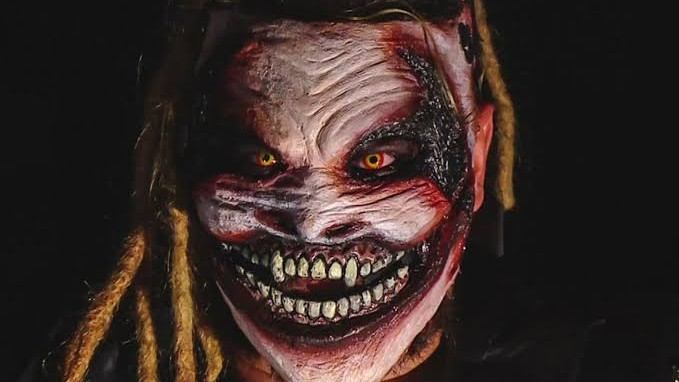
From The Boogeyman and Bray Wyatt to Kane and The Undertaker, the DWI Podcast crew inspired our ranking of wrestling’s scariest stars.
Professional wrestling has always known how to make fear part of the show. Sometimes it comes from supernatural presentation, sometimes from psychological horror, and sometimes from the unsettling belief that the wrestler in front of you might actually be dangerous.
Professional wrestling has created plenty of monsters, but “scary” has never meant only one thing. For one generation, fear meant The Undertaker slowly walking toward the ring while the lights dimmed and the audience watched something that barely seemed human. For another, it meant Kane appearing through fire, Bray Wyatt speaking from somewhere between a children’s show and a nightmare, or The Boogeyman eating worms while everyone around him tried not to react.
Then there is another category entirely. Some wrestlers were frightening because the boundary between performance and reality felt unusually thin. Abdullah the Butcher accumulated scars and stories that made him look dangerous before the bell even rang, while New Jack’s ECW reputation created the uncomfortable possibility that whatever happened next might not be completely under control.
That range became the centerpiece of a Halloween discussion on the DWI Podcast, with PC Tunney, Dan “DP” Phelan and Andrew Balaz comparing the wrestlers who frightened them through presentation, violence, character work and reputation. Their conversation moved freely between WWE monsters, hardcore legends and wrestlers whose presence carried something darker than the normal theatrical danger of professional wrestling.
Taking that discussion as the foundation, these are The Chairshot’s Top 5 scariest professional wrestlers of all time.
#5 — The Boogeyman
There are wrestling characters designed to intimidate opponents, and then there are characters designed primarily to make everyone watching uncomfortable. The Boogeyman landed firmly in the second category, using a presentation that mixed horror imagery with gross-out comedy in a way that made him particularly effective with younger fans.
The cracked face paint, missing teeth, jerky body movements and tendency to smash clocks against his own head made him look less like a conventional wrestler than someone who had wandered onto SmackDown from a low-budget horror movie. Then there were the worms, which became the image that defined the character.
Boogeyman eating live-looking worms was memorable enough on its own, but WWE repeatedly pushed the discomfort further by having him spit them onto opponents or force other wrestlers into situations where they had to interact with them. Whether the worms were frightening or simply disgusting almost became irrelevant because the reaction was the same: people wanted to get away from him.
That distinction came through in the DWI discussion as well. The hosts acknowledged that Boogeyman could easily veer into camp, particularly when viewed through adult eyes years later, but for a specific generation of younger viewers the randomness of the act made him legitimately unnerving.
Part of the effectiveness came from never knowing exactly how seriously the audience was supposed to take him. Boogeyman could participate in comedy one week and appear like a genuine horror character the next, making the gimmick difficult to completely categorize. He was never one of WWE’s most accomplished wrestlers, but the character’s job was to make people recoil before the match even started, and few WWE performers ever committed more completely to that assignment.
#4 — New Jack
New Jack did not need supernatural lighting, masks or elaborate backstory to make people nervous because his reputation did most of the work. The former ECW star developed an identity built around chaos, weapons and a level of violence that frequently felt more dangerous than the controlled brutality normally associated with professional wrestling.
When New Jack entered a match carrying a trash can full of objects that clearly had no traditional place in wrestling, audiences understood that the normal rules were probably not going to apply. That alone would have made him intimidating, but the stories surrounding him made the effect considerably stronger.
The DWI discussion emphasized the real-life edge that followed New Jack throughout his career, particularly incidents where the distinction between planned violence and genuine danger became difficult to identify. Fans did not simply watch New Jack because of what he might do within a wrestling storyline; part of the tension came from wondering whether everyone involved would remain on the same page.
That unpredictability separated him from characters specifically designed to frighten television audiences. The Undertaker wanted the audience to believe he was supernatural, while Kane wanted opponents to fear the monster standing across from them. New Jack created a different feeling because viewers could believe the person himself might be willing to go somewhere everyone else would not.
ECW provided the perfect environment for that reputation to grow. The promotion rewarded extremity, and New Jack’s matches frequently became showcases for the kind of weapons-based violence that made even experienced wrestling fans uncomfortable.
That makes him one of the rare wrestlers whose fear factor actually becomes stronger once someone knows more about the person behind the presentation. The character was dangerous, but the reputation made him feel even more unsettling.
#3 — Bray Wyatt
Bray Wyatt understood that horror works differently when the audience cannot immediately explain what is wrong. His earliest Wyatt Family presentation already carried that quality, with the rocking chair, lantern, cryptic promos and swamp-preacher cadence creating someone who did not resemble the normal collection of arrogant heels, monsters and authority figures surrounding him.
Then Wyatt reinvented the idea.
The Firefly Fun House initially appeared ridiculous by design. Bray smiled into the camera inside a brightly colored children’s-show environment surrounded by puppets, motivational phrases and exaggerated enthusiasm, but something underneath it always felt wrong.
That discomfort became the foundation for The Fiend. The mask transformed Wyatt into something much more explicitly rooted in horror, but the character worked because the frightening imagery had already been established psychologically. The Fun House suggested that Bray was hiding something, while The Fiend revealed what had supposedly been waiting beneath the surface.
The DWI hosts specifically highlighted how fully Wyatt committed to the concept. Horror elements in wrestling can easily feel like costumes temporarily placed onto otherwise normal performers, but Wyatt built entire segments around unsettling imagery, tone and behavior rather than treating the character as something that existed only during entrances.
That willingness to experiment also made him unique among wrestling’s supernatural characters. The Undertaker and Kane relied heavily on physical presence, while Wyatt could create discomfort with a quiet promo, a disturbing puppet or a sudden change in facial expression without needing any physical violence at all.
The character was not always booked consistently, and some of the supernatural elements eventually became difficult for WWE to balance inside ordinary wrestling matches. None of that erases what worked, because when Bray Wyatt’s ideas connected, professional wrestling briefly felt like it had wandered into another genre.
#2 — Kane
Kane’s first appearance remains one of wrestling’s greatest monster introductions because WWE spent months convincing the audience to fear someone it had never seen. Paul Bearer gradually revealed the story of The Undertaker’s supposedly dead younger brother throughout 1997, explaining that Kane had survived the funeral-home fire connected to Undertaker’s childhood, had been horribly burned and was coming for the brother Bearer blamed for everything.
Then Badd Blood arrived.
During the first Hell in a Cell Match between The Undertaker and Shawn Michaels, the arena went dark and Kane finally appeared. The presentation immediately justified the buildup, with Kane looking enormous, masked and almost completely covered in red-and-black gear.
He walked toward the Cell with deliberate movements, reached the structure and ripped the door from its hinges before confronting The Undertaker. Then he Tombstoned him, immediately establishing that this was not just another monster but someone who could walk into Undertaker’s world and turn his own mythology against him.
The DWI discussion emphasized how much more unpredictable and violent early Kane felt compared with many of the wrestlers around him. The fire, mask and silence created a character who seemed less interested in wrestling than destruction, while his connection to The Undertaker gave the audience an immediate understanding of how dangerous he was supposed to be.
Kane also benefited from being visually distinctive in almost every possible way. The mask hid normal facial expression, the long hair obscured even more of the person underneath, and the red lighting and pyrotechnics turned his entrance into a warning rather than a celebration.
Later versions of Kane became more human. He spoke regularly, formed unlikely partnerships, became comedic and eventually spent years wrestling without the original mask, but those developments only demonstrate how frightening the original version had been.
Early Kane was not supposed to be relatable, funny or even entirely understandable. He was a problem The Undertaker could not escape.
Honorable Mention — Abdullah the Butcher
Abdullah the Butcher looked frightening before anyone explained who he was, and his scarred forehead told enough of the story on its own. Decades of bloody matches created a visual history across Abdullah’s face, while his reputation for using forks and whatever other weapons were available made him one of professional wrestling’s most recognizable hardcore attractions long before extreme wrestling became its own mainstream category.
The DWI discussion placed Abdullah firmly in the category of wrestlers whose fear came partly from believability. Nothing supernatural was required because he looked like someone who had spent his entire adult life fighting people, and the stories surrounding him reinforced that impression.
That reputation carried across territories and generations because Abdullah worked differently from wrestlers whose characters depended on a particular television storyline. He could arrive almost anywhere and immediately communicate the same basic threat: this match could become violent very quickly.
His forehead became almost symbolic of the character. The heavy scarring created by years of blading made Abdullah visually unsettling even while standing still, and once the match began, blood usually became part of the presentation rather than an unexpected development.
Abdullah narrowly misses the main five because the wrestlers above created more complete combinations of character, presentation and widespread audience fear. Few wrestlers, though, ever looked more legitimately dangerous.
#1 — The Undertaker
Professional wrestling has produced dozens of frightening wrestlers, but only one built an entire legendary career around being The Deadman.
The Undertaker debuted at Survivor Series 1990 as the mystery partner for Ted DiBiase’s Million Dollar Team, and everything about the presentation immediately felt different from the rest of WWE. The black hat, long coat and slow walk created the basic silhouette, while the expressionless stare and deliberate movements made the character feel almost disconnected from the normal rhythm of a wrestling match.
Then the mythology expanded.
Paul Bearer arrived with the urn, Undertaker began surviving attacks that would finish ordinary wrestlers and the entrances became increasingly elaborate. Coffins, darkness, smoke and funeral imagery gradually turned the character into something far larger than the original presentation.
That evolution became an important part of the DWI conversation. The hosts noted how effective the early Deadman was at changing the atmosphere of an arena because once Undertaker appeared, everything seemed slower and darker. The character demanded a different kind of attention without needing to sprint toward opponents or scream into the camera.
That restraint separated Undertaker from many wrestling monsters. The character trusted anticipation, allowing WWE to darken an arena, play the opening funeral bell and let thousands of fans react before Undertaker even became visible.
Later versions added entirely different dimensions. The Ministry of Darkness took the supernatural material into much more sinister territory, while the American Badass period temporarily stripped away much of the mythology. Undertaker eventually returned to the Deadman identity and combined elements from nearly every previous version into the character fans remember today.
That longevity is one reason he stands above everyone else. Kane may have been more immediately violent, Bray Wyatt occasionally pushed wrestling horror into stranger psychological territory, while New Jack and Abdullah possessed reputations grounded much more strongly in reality.
The Undertaker combined nearly every type of wrestling fear. He looked intimidating, moved unnaturally, carried supernatural mythology and eventually developed enough real-world credibility that even the character’s theatrical elements felt believable inside wrestling’s universe.
More importantly, it worked across generations. A child watching Survivor Series in 1990 could be frightened by The Undertaker, while another watching the Ministry of Darkness nearly a decade later could experience something completely different. A generation after that, the familiar bell still told an arena that everything was about to change.
Plenty of wrestlers have played monsters, but The Undertaker became wrestling’s monster.
Fear in professional wrestling depends heavily on the person watching. The Boogeyman terrified younger fans because worms, missing teeth and unpredictable behavior are exactly the kind of images children remember long after the television turns off, while Bray Wyatt approached the same goal more psychologically by creating environments where something felt disturbing even before The Fiend appeared.
New Jack and Abdullah the Butcher existed on the other side of the spectrum. The fear surrounding them came partly from reputation and the possibility that the violence might escape the normal boundaries of performance, while Kane and The Undertaker combined physical intimidation with supernatural storytelling better than almost anyone else.
That variety explains why the DWI conversation produced so many possible answers. Vader could frighten someone simply by moving toward them, Papa Shango could make a young fan believe voodoo belonged inside wrestling, early Mankind looked and behaved like someone who had escaped from somewhere nobody wanted to visit, and Ox Baker carried a reputation from an era when wrestling still frequently relied on audiences believing much more of what they saw.
There is no single formula. The costume, entrance and reputation can all do the job, and sometimes all a wrestler needs is darkness, one funeral bell and enough patience to let the audience imagine what is coming next.
For more than three decades, nobody used that combination better than The Undertaker.
This article is based on the Halloween Top 5 discussion featuring PC Tunney, Dan “DP” Phelan and Andrew Balaz on the DWI Podcast/The Chairshot Radio Network.
Listen here:
Powered by RedCircle
Chairshot Radio Network
Launched in 2017, the Chairshot Radio Network presents you with the best in sports, entertainment, and sports entertainment. Wrestling and wrestling crossover podcasts + the most interesting content + the most engaging hosts = the most entertaining podcasts you’ll find!
MONDAY - Bandwagon Nerds
TUESDAY - 4 Corners Podcast
WEDNESDAY - The Grown Ass Man Podcast
THURSDAY - The Benchwarmers Trivia Podcast
FRIDAY - DWI Podcast (Drunk Wrestling Intellect)
SATURDAY - The Mindless Wrestling Podcast
SUNDAY - 30 Mindless Minutes
CHAIRSHOT RADIO NETWORK PODCAST SPECIALS
Attitude Of Aggression Podcast: The Big Five Project (chronologically exploring WWE's PPV/PLE history) Unidentified History (Ufology) & Game Gone Wrong (Game of Thrones Universe)
Chairshot Radio Network Your home for the hardest hitting podcasts... Sports, Entertainment and Sports Entertainment!
Powered by RedCircle
Let us know what you think on social media @ChairshotMedia and always remember to use the hashtag #UseYourHead!


Chairshot NFL News Report (10/30/2026): Bears Land Jeffery Simmons, Packers Beat Panthers & A.J. Brown Faces Injury Setback
Chicago trades two first-round picks for Jeffery Simmons, Green Bay defeats Carolina, and A.J. Brown faces another injury setback.

Greg DeMarco’s Top 5 NFL Week 8 Matchups
Greg DeMarco ranks the five NFL Week 8 matchups that matter most, led by Vikings-Lions, Bears-Seahawks and Chiefs-Broncos.

Chairshot NFL News Report (10/29/2026): Josh Downs Wants Out, Chiefs Sign Justin Tucker & McLaurin’s Season Ends
Josh Downs requests a trade from Indianapolis, Kansas City signs Justin Tucker, and Washington loses Terry McLaurin for the season.

Greg DeMarco’s NFL Power Rankings – Week 7
The Vikings take over No. 1 in Greg DeMarco's Week 7 NFL Power Rankings, while the Bengals, Seahawks and Buccaneers...

Chairshot NFL News Report (10/28/2026): Colts Trade Nelson and Buckner, Giants Lose Tracy & Bengals Face Another ACL Injury
The Colts trade Quenton Nelson to Seattle and DeForest Buckner to San Francisco, while the Giants, Bengals and Ravens face...

Bandwagon Nerds News Report (10/30/2026): Patrick Stewart Dies, PUBG Gets Glover & Duskbloods Slips
Patrick Stewart dies at 86, Donald Glover takes on PUBG for Netflix and FromSoftware delays The Duskbloods into 2027.

Bandwagon Nerds News Report (10/29/2026): Hunger Games Rises, Smile Finds Bruckner & Witchbrook Gets Its Date
Sunrise on the Reaping earns strong first reactions, Smile 3 lands David Bruckner and Nintendo finally dates Witchbrook.

Grown Ass Man Podcast #009: Just Blanche and Dorothy Out Here Bowling
Greg and Patrick talk bowling drama, playoff expansion, workplace chaos, NIL, bowl games, aging, medication side effects, and grown-ass adjustments.

Bandwagon Nerds News Report (10/28/2026): Pokémon UNITE Ends, The Birds Takes Flight & Harry Potter Finds His Parents
Pokémon UNITE announces its shutdown, Sarah Snook leads HBO’s The Birds and Harry Potter casts James, Lily and Charlie Weasley.

Bandwagon Nerds News Report (10/27/2026): Eric Bauza Dies, DC Breaks the Marvel Mold & Sucker Punch Cuts Staff
Looney Tunes voice star Eric Bauza dies at 46, James Gunn explains DC’s standalone strategy and Sucker Punch cuts 26...
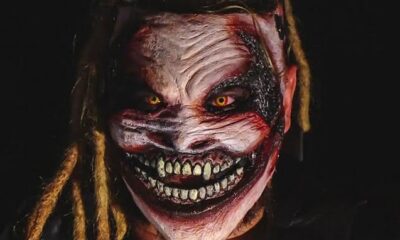

Chairshot Top 5: Scariest Wrestlers of All Time
From The Boogeyman and Bray Wyatt to Kane and The Undertaker, the DWI Podcast crew inspired our ranking of wrestling’s...

Today In Pro Wrestling History: October 31st
From B-I Cannon’s 1967 classic and Raw’s 2000 shocker to Muto’s 2004 tribute, Crown Jewel 2019, and JCW Hallowicked 2025—relive...


Mindless Wrestling Podcast: Bayley, We Wanna Know…
Tune in every week as DJ, Rob and Jason give their thoughts on the world of pro wrestling and beyond!


Mitchell’s WWE SmackDown Results & Report! (10/30/26)
Tonight will be Very Nice, Very Evil!

Andrew’s JCW Lunacy Results & Ratings: Ep #105
Vito snapped and did some of his best work in years, then he went to jail at the end of...

Chairshot Top 5: Loudest Crowd Reactions in Wrestling History
From CM Punk in Chicago to Dolph Ziggler's Money In The Bank cash-in, these wrestling crowds became as unforgettable as...

Today In Pro Wrestling History: October 30th
From SmackDown 2001 to Hell in a Cell 2016, and AEW’s 2019 tag finals to MLW Fightland 2022 & JCW...

Chairshot NFL: NFL Week 8, Brew Crew & Scary Wrestlers
Don't drink and drive, drink and podcast! Join DP and PC weekly for their thoughts on RAW, SmackDown and every...

Chairshot Wrestling News Report (10/30/2026): The Hardys Fall, Amazing Red Retains & STARDOM Delivers
syX defeats The Hardys, Amazing Red retains his X-Division title, STARDOM delivers a major championship match, and SmackDown prepares for...

Andrew’s TNA iMPACT! Results & Ratings: 10.29.2026
KO TV title match, M by Elegance vs Jada Stone! Amazing Red defends the X-Division title and Hardys take a...