Sports Entertainment
Chairshot Top 5: Worst WWE Gimmicks That Actually Made Television
From the Red Rooster and Beaver Cleavage to Kerwin White, these are five terrible WWE gimmicks that somehow reached national television.

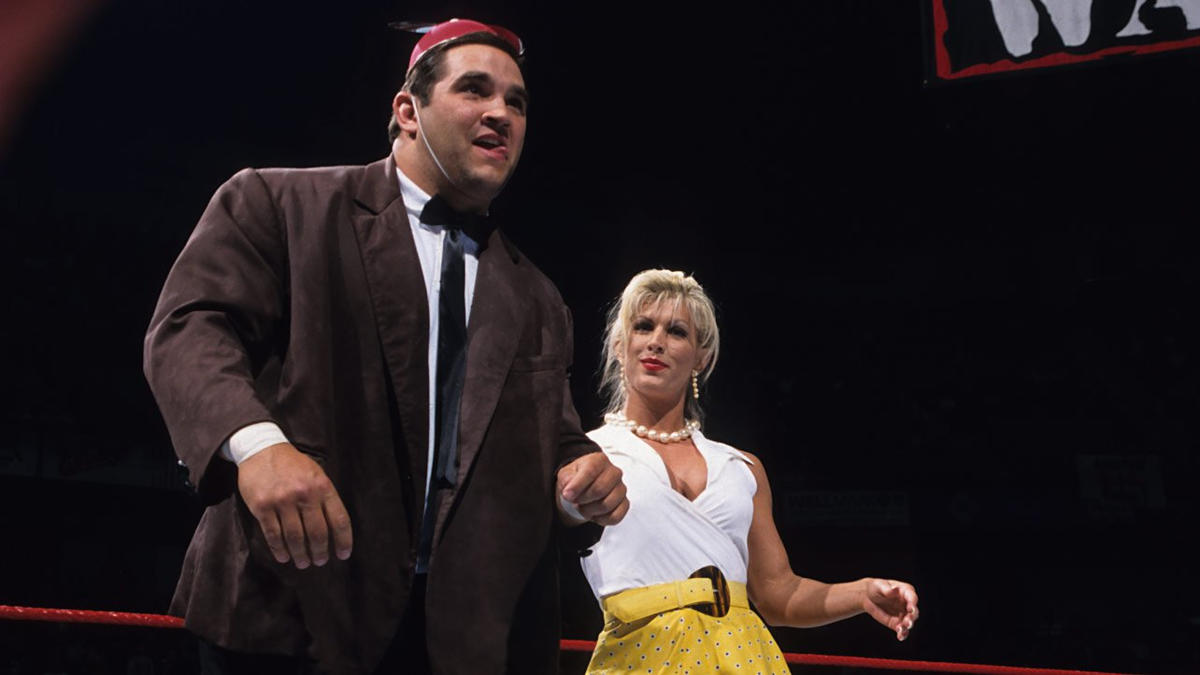
From the Red Rooster and Beaver Cleavage to Kerwin White, these are five terrible WWE gimmicks that somehow reached national television.
WWE has created some of professional wrestling’s greatest characters, but not every idea deserved to survive the creative meeting. From an evil plumber carrying a used plunger to Chavo Guerrero renouncing his own heritage, these gimmicks somehow made it all the way onto national television.
Professional wrestling requires a certain amount of creative courage. Someone eventually had to pitch The Undertaker, Goldust and Bray Wyatt in rooms where those ideas probably sounded just as strange as anything else written on the whiteboard.
That is why judging wrestling gimmicks entirely by their initial description can be dangerous. A talented performer can turn something ridiculous into a career, while an idea that sounds terrible on paper can become brilliant once the wrestler understands how to make it work.
Sometimes, however, the first instinct was correct.
WWE history contains characters that seemed doomed from the moment someone explained the premise. Talented wrestlers became barnyard animals, blue-collar occupations became entire personalities and ideas that were questionable even by wrestling standards somehow survived enough meetings to receive costumes, entrance music, television time and occasionally actual feuds.
This ranking considers more than whether a gimmick failed. The concept itself needs to deserve criticism, especially when it limited or embarrassed a wrestler who had demonstrated considerably more ability elsewhere.
These are the Top 5 worst WWE gimmicks that actually made television.
#5 — The Goon
Professional wrestling and hockey have enough in common that combining them probably sounded reasonable for approximately thirty seconds.
Both are physical. Both encourage fighting under certain circumstances. Both contain performers willing to sacrifice teeth for their profession. Then WWE created The Goon.
Veteran wrestler Bill Irwin arrived in WWE in 1996 as a former hockey player supposedly thrown out of every league because he was too violent. That premise at least contained the outline of a workable wrestling character: an uncontrollable enforcer who discovered another sport where fighting was encouraged.
WWE refused to stop there.
The Goon wrestled in a hockey jersey, gloves and specially designed boots shaped to resemble ice skates. His fictional hometown was The Penalty Box, and the character leaned so heavily into hockey imagery that the concept stopped resembling an athlete with an interesting background and became a human sports mascot.
The boots were particularly damaging. Professional wrestling already requires performers to move safely on a canvas while executing athletic maneuvers at speed. Designing footwear specifically to resemble another sport’s equipment added visual comedy without giving Irwin much of anything useful to work with.
The Goon also arrived during one of WWE’s most gimmick-heavy periods, which meant even standing out as ridiculous required serious effort. Plumbers, garbage collectors, hog farmers and dentists were already sharing television time. Somehow, the hockey player still felt excessive.
WWE later included The Goon among its most absurd Superstars, describing the character’s hockey gear and skate-like boots as part of the problem. That retrospective honesty probably explains the gimmick better than any modern criticism could.
There was a decent character buried somewhere inside the concept. WWE dressed him like he was late for warmups and never found it.
#4 — T.L. Hopper
WWE spent much of the mid-1990s answering a question nobody had asked: What if everyone’s occupation was also their entire personality? That philosophy gave professional wrestling T.L. Hopper.
Tony Anthony had already enjoyed significant success in regional wrestling, particularly as the Dirty White Boy, before WWE transformed him into an unpleasant plumber in 1996.
Not a wrestler who happened to be a plumber. A wrestling plumber.
Hopper entered wearing stained work clothes while the sound of a flushing toilet played over the arena speakers. He carried a plunger named Betsy and eventually used it to humiliate defeated opponents by pressing it against their faces. There was essentially nowhere for the character to go after that.
A gimmick works best when the basic idea provides multiple directions for personality and storytelling. The Undertaker could evolve because death, darkness and supernatural mythology offered endless possibilities. A wrestling plumber eventually runs into the unavoidable creative ceiling of plumbing jokes.
WWE found most of them quickly.
Hopper even feuded with Duke “The Dumpster” Droese, creating the kind of matchup that could only have happened during this particular period of WWE television. The plumber versus the garbage collector sounds less like a wrestling rivalry than two departments arguing over a municipal contract.
The frustrating part is that Anthony knew how to play a believable tough guy.
Nothing about his existing skill set suggested he required a toilet-flush entrance or a weaponized plunger to become interesting. WWE took someone capable of projecting legitimate roughness and replaced that credibility with an occupation-based comedy character.
The gimmick was gross, limiting and almost impossible to take seriously. At least the entrance music told viewers immediately where the idea belonged.
#3 — Beaver Cleavage
The Attitude Era proved WWE could take ideas that would have been impossible only a few years earlier and turn them into successful television. It also proved that being allowed to do almost anything does not mean almost anything should be done.
After Headbanger Thrasher suffered an injury in 1999, WWE needed something for his tag-team partner Mosh. Glenn Ruth’s absence opened the door for Charles Warrington to receive a solo character. That character was Beaver Cleavage.
The gimmick parodied wholesome 1950s family television, particularly Leave It to Beaver. Warrington dressed like an oversized child in short pants and a beanie while appearing alongside Mrs. Cleavage, his supposedly loving mother.
Then WWE added the part that made the entire concept difficult to believe even by Attitude Era standards. Beaver seemed much too interested in his mother.
The vignettes were filled with deliberate innuendo built around their relationship, creating a character that was neither genuinely funny nor useful as a serious wrestling act. The black-and-white presentation made the parody obvious, but understanding the joke did not improve it.
WWE promoted the character heavily before allowing Beaver Cleavage to appear on Raw, only for the gimmick to collapse almost immediately. Warrington later acknowledged that people told him the idea was stupid, although he initially remained excited about receiving an opportunity as a singles performer.
That enthusiasm makes the failure almost unfortunate.
Wrestlers frequently accept difficult gimmicks because rejecting television exposure can be even more dangerous for a career. Warrington committed to the material, but commitment could not solve the fundamental problem that Beaver Cleavage felt like a sketch rather than somebody capable of existing within an ongoing wrestling show.
The character disappeared within weeks and was replaced by another storyline involving Warrington under the shortened name Chaz.
Some wrestling gimmicks fail because audiences never understand the concept. Everybody understood Beaver Cleavage.
And that was the problem.
#2 — The Red Rooster
Terry Taylor was already an accomplished professional wrestler before arriving in WWE. That makes what happened considerably worse.
Taylor had built a strong reputation through promotions including Mid-South and the UWF, demonstrating enough technical ability and personality to be viewed as someone capable of becoming a significant national star.
WWE paired him with Bobby Heenan. So far, everything sounded promising. Then Terry Taylor became a rooster.
The Red Rooster presentation included red gear, a strip of hair dyed bright red and styled upward like a comb, and mannerisms modeled after an actual chicken. Taylor strutted, moved his head awkwardly and embraced poultry-related terminology because WWE had decided the path toward unlocking his potential involved turning him into a barnyard animal.
The tragedy is that Heenan managing an arrogant Terry Taylor could have worked.
Taylor had enough ability to justify a confident heel persona, while Heenan specialized in making talented wrestlers seem more important. The combination had obvious possibilities without requiring anyone to pretend the performer had become livestock.
Instead, the gimmick eventually became the defining joke attached to Taylor’s career.
WWE itself has repeatedly referenced the Red Rooster among its strangest and worst historical creations. Its retrospectives acknowledge Taylor’s established wrestling ability while treating the transformation into a human rooster with approximately the same confusion fans have expressed for decades.
That is why the Red Rooster ranks this high. The Goon and T.L. Hopper were terrible concepts, but neither carried the same sense that WWE had actively hidden a wrestler’s strengths underneath the gimmick.
Taylor could wrestle. Taylor could talk. Taylor already had credibility. WWE looked at all of that and decided what he really needed was red hair and a chicken walk.
Honorable Mention — Duke “The Dumpster” Droese
Duke Droese narrowly avoids the main ranking because there was more to the character than the name suggests. Droese was legitimately a large, athletic wrestler, and he approached the garbage-man persona with enough toughness that the gimmick occasionally worked better than it had any right to.
Still, he was a garbage man.
Droese carried a metal trash can to the ring, was announced as coming from Mount Trashmore, Florida, and built much of his presentation around taking out the trash. He feuded with Jerry Lawler and later Triple H, even handing the future multi-time world champion an early WWE defeat that helped secure Droese the No. 30 position in the 1996 Royal Rumble.
That level of involvement separates him from some of WWE’s more disposable occupational gimmicks. It also demonstrates how strange the era was.
Droese himself later explained that he had originally envisioned a tough, Road Warriors-inspired character built around using a garbage can. WWE expanded that into a complete sanitation-worker identity because cartoonish occupations were simply part of the company’s creative language at the time.
The character was silly, but the performer occasionally made it functional. That is enough to keep the Dumpster just outside the five worst.
#1 — Kerwin White
The other gimmicks on this list were stupid. Kerwin White was worse because the central idea was uncomfortable by design.
Chavo Guerrero arrived on Raw in 2005 after years of being openly identified with the Guerrero wrestling family. His surname carried enormous wrestling history, and Chavo had already established himself as a talented performer through WCW and WWE.
Then he announced that being Chavo Guerrero was apparently holding him back. Guerrero dyed his hair blond, wore preppy clothing, adopted the name Kerwin White and declared that he was rejecting his Hispanic heritage to join middle-class white America.
That was the gimmick.
WWE television presented White in sweater vests and khakis while leaning into suburban stereotypes. He eventually drove a golf cart to ringside, carried golf clubs and entered a program with Shelton Benjamin that added an uncomfortable racial dimension to a concept already built almost entirely around ethnicity.
The character eventually gained Nic Nemeth—years before he became Dolph Ziggler—as White’s caddie. There is heel heat, and then there is making an audience wonder why the character exists at all. The fundamental problem was that nothing about Kerwin White improved Chavo Guerrero.
It did not reveal hidden charisma, create a new wrestling style or move him into a role unavailable under his established identity. The gimmick simply removed one of his strongest assets—his connection to the Guerrero family—and replaced it with an intentionally offensive stereotype.
WWE’s own coverage at the time openly described White as denouncing his Hispanic heritage and explained that the character believed doing so would allow him to reach his full potential.
Reading that description decades later does not make the concept easier to understand.If anything, it makes the decision to put it on television more remarkable.
Guerrero committed to the presentation because professional wrestlers have historically been asked to make the best of whatever creative direction they receive. He dyed the hair, wore the clothes, drove the golf cart and played the character as written.
Nothing could solve the underlying idea.
The Red Rooster buried Terry Taylor beneath an animal gimmick, while Beaver Cleavage trapped a capable wrestler inside an inappropriate comedy sketch. Kerwin White required Chavo Guerrero to reject his own name and heritage as the entire basis of the character.
That makes it more than one of WWE’s strangest gimmicks. It makes it the worst idea on this list.
A professional wrestler can survive a bad name, questionable gear or an awkward debut. Surviving a character that actively prevents the audience from seeing anything useful underneath it is considerably harder.
The Goon turned a veteran wrestler into a hockey costume. T.L. Hopper reduced another experienced performer to plumbing jokes, while Beaver Cleavage demonstrated that Attitude Era creative freedom occasionally needed considerably more supervision.
The Red Rooster remains one of wrestling’s most famous cautionary tales because Terry Taylor entered WWE with an established reputation and left permanently connected to a gimmick built around behaving like a chicken.
Kerwin White went further.
Instead of disguising Chavo Guerrero’s strengths beneath something silly, the gimmick deliberately removed his established identity and replaced it with a racial concept that was uncomfortable even within the deliberately provocative wrestling environment of 2005.
The remarkable part is that every one of these ideas survived the same basic process.
Someone proposed it. Other people discussed it. Costumes were created, music was chosen, television time was allocated and eventually a wrestler walked through the curtain carrying the finished product.
Professional wrestling requires creative risks, and some of the industry’s greatest characters probably sounded ridiculous before audiences saw them. These five provide the necessary reminder that occasionally the ridiculous idea really is just ridiculous.
Research included archival and historical material from WWE.com covering The Red Rooster, T.L. Hopper, The Goon, Beaver Cleavage, Duke “The Dumpster” Droese and the 2005 Kerwin White storyline.
Chairshot Radio Network
Launched in 2017, the Chairshot Radio Network presents you with the best in sports, entertainment, and sports entertainment. Wrestling and wrestling crossover podcasts + the most interesting content + the most engaging hosts = the most entertaining podcasts you’ll find!
MONDAY - Bandwagon Nerds
TUESDAY - 4 Corners Podcast
WEDNESDAY - The Grown Ass Man Podcast
THURSDAY - The Benchwarmers Trivia Podcast
FRIDAY - DWI Podcast (Drunk Wrestling Intellect)
SATURDAY - The Mindless Wrestling Podcast
SUNDAY - 30 Mindless Minutes
CHAIRSHOT RADIO NETWORK PODCAST SPECIALS
Attitude Of Aggression Podcast: The Big Five Project (chronologically exploring WWE's PPV/PLE history) Unidentified History (Ufology) & Game Gone Wrong (Game of Thrones Universe)
Chairshot Radio Network Your home for the hardest hitting podcasts... Sports, Entertainment and Sports Entertainment!
Powered by RedCircle
Let us know what you think on social media @ChairshotMedia and always remember to use the hashtag #UseYourHead!

Chairshot NFL News Report (10/12/2026): Ravens Win in OT, Texans Land Harrison & Jaguars Stun Eagles
Baltimore wins in overtime without Lamar Jackson, Houston trades for Marvin Harrison Jr. and Jacksonville shocks Philadelphia in London.

Chairshot NFL News Report (10/11/2026): Marvin Harrison Jr. Trade Looms, OBJ Activated & Bills Lose Two Starters
Arizona prepares to trade Marvin Harrison Jr., Minnesota elevates Odell Beckham Jr. and Buffalo loses two starters before Monday Night...

Chairshot NFL News Report (10/10/2026): Mike Ditka Passes Away, Lamar Jackson Out & Eagles Lose Barkley
Mike Ditka passes away at 86, Lamar Jackson is ruled out, and the Eagles lose Saquon Barkley and DeVonta Smith...

Chairshot NFL News Report (10/9/2026): Buccaneers Stun Cowboys, Payton Takes Over & Pittman Sidelined
Tampa Bay stuns Dallas on Thursday Night Football, Sean Payton takes back Denver's offense and Michael Pittman Jr. faces a...


Chairshot NFL: Week 5 Preview, Greg’s New Power Rankings
Andrew Balaz is joined by Greg DeMarco (filling in for PC!) for Week 5 picks, NFL power rankings, weekly standouts,...
Bandwagon Nerds #362: Stars, Dirt & Ditka
The Nerds discuss the season finale of Lanterns and Patrick gathers his thoughts to describe his mixed feelings about the...


Bandwagon Nerds News Report (10/12/2026): Artemis Fowl Gets Another Shot, Other Mommy Wins & Wildwood Stuns
Artemis Fowl returns as an animated series, Other Mommy wins the box office and Laika’s Wildwood earns raves at its...


30 Mindless Minutes: Michael Bay back with Transformers?
Take your mind off of things, for 30 minutes.

Bandwagon Nerds News Report (10/11/2026): Cage Eyes True Detective, Blade Runner Returns & BlazBlue Levels Up
Nicolas Cage teases True Detective, Blade Runner 2099 gets a trailer and date, and BlazBlue: Central Fiction heads to PS5.

Bandwagon Nerds News Report (10/10/2026): Avatar Expands, Exorcist Returns & Ace Combat Soars
Avatar adds a Kuruk prequel, Mike Flanagan reveals his Exorcist, Ace Combat 8 becomes the series’ fastest million-seller, and DC...

Chairshot Top 5: Worst WWE Gimmicks That Actually Made Television
From the Red Rooster and Beaver Cleavage to Kerwin White, these are five terrible WWE gimmicks that somehow reached national...

Today In Pro Wrestling History: October 12th
Explore iconic wrestling history: Ric Flair vs. Bret Hart (1992), TNA Bound for Glory IV (2008), ROH Glory By Honor...

Chairshot Wrestling News Report (10/12/2026): Leon Slater Makes History, Amazing Red Wins Gold & Redbeard Joins syX
Leon Slater becomes TNA's youngest World Champion, Amazing Red wins gold, Erick Redbeard joins syX, and five titles change hands...

Andrew’s TNA Bound For Glory Results & Ratings: 10.11.2026
TNA's biggest show is today! Bound For Glory will crown a new X Division champ, the Order 4 Way should...

Chairshot Top 5: Most Impressive Wrestling Mustaches
From Ox Baker’s enormous handlebars to Hulk Hogan’s iconic blond horseshoe, these are five of professional wrestling’s greatest mustaches.

Today In Pro Wrestling History: October 11th
Pro wrestling history thrives on evolution: from the high-flying J-Crown epic in '96 and Destruction '10, to STARDOM '15, Ellsworth's...

Chairshot Wrestling News Report (10/11/2026): Penta Wins MITB, Liv Morgan Regains Gold & Tiffany Makes History
Penta and Tiffany Stratton win Money in the Bank, Liv Morgan regains the Women's World Title, and TNA prepares for...

Mitchell’s AEW Collision Results & Report! (10/10/26)
Deuxième Partie!

Andrew’s MLW Fusion Results & Ratings: S8 E22
Opera Cup matches, a New York City Street Fight, and yet again, another squash match. And the crowd goes mild...


Mitchell’s WWE Money in the Bank Results & Report! (10/10/26)
Show me the money!