Sports Entertainment
Chairshot Top 5: Wrestling Gimmicks That Were Ahead of Their Time
From Waylon Mercy and Raven to Brian Pillman and Gorgeous George, these wrestling gimmicks predicted where the industry was heading years later.

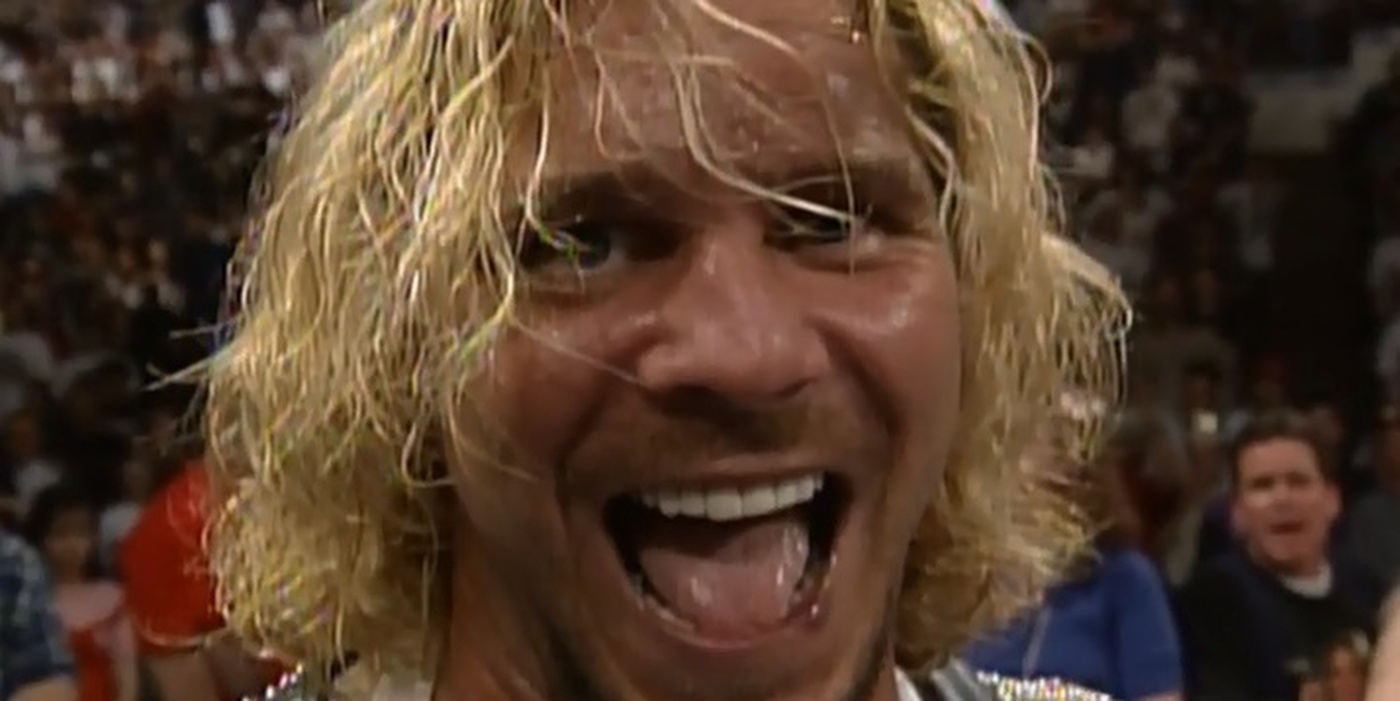
From Waylon Mercy and Raven to Brian Pillman and Gorgeous George, these wrestling gimmicks predicted where the industry was heading years later.
Some wrestling characters arrive too early for the industry around them. From Waylon Mercy’s quiet menace to Brian Pillman deliberately blurring reality and fiction, these gimmicks anticipated ideas wrestling would embrace years or even decades later.
Professional wrestling loves borrowing from its own history. A character disappears, enough time passes, and eventually pieces of that idea return wearing different clothes for a new generation.
That does not necessarily mean somebody copied somebody else. Wrestling changes along with television, pop culture and its audience, and sometimes a performer simply discovers an idea before the industry is ready to take full advantage of it. What looks unusual in one era can become an accepted part of wrestling presentation years later.
The most interesting examples are not necessarily unsuccessful gimmicks. Some became major stars, while others disappeared before their potential could be fully explored. What connects them is that elements of their presentation became much easier to recognize after wrestling eventually caught up.
This ranking considers originality, influence and how closely each character anticipated approaches that later became common. The question is not simply whether the gimmick was good, but whether it seems more at home when viewed through the wrestling landscape that followed.
These are the Top 5 wrestling gimmicks that were ahead of their time.
#5 — Waylon Mercy
Waylon Mercy arrived in WWE in 1995 looking like someone who had wandered out of a Southern psychological thriller rather than a professional wrestling locker room.
Dan Spivey developed the character after being inspired by Robert De Niro’s Max Cady in Cape Fear. Mercy wore Hawaiian shirts, slicked-back dark hair and an unsettling smile while delivering interviews in a calm Southern drawl. He repeatedly presented himself as a peaceful, polite man even though everything about his demeanor suggested violence was only a few seconds away.
That restraint made Mercy especially unusual for WWE in 1995. The company was still populated heavily by broad characters whose occupations or personalities could be understood almost instantly: garbage men, race car drivers, hog farmers, clowns and various exaggerated villains. Scary wrestlers generally demonstrated that they were scary by yelling.
Mercy barely needed to raise his voice.
His introductory vignettes placed him in peaceful surroundings while he calmly explained himself to the audience. Before matches, he could shake an opponent’s hand like a gentleman, only to become disturbingly intense once competition began. His wide-eyed expression while applying the sleeper hold became considerably more unsettling because the aggression contrasted with the politeness surrounding it.
That formula would become familiar years later. Bray Wyatt built much of his original WWE appeal around soft-spoken menace, Southern imagery, cryptic philosophy and the idea that the most dangerous person in the room might be the one who never needs to shout. Later psychological characters throughout wrestling similarly learned that silence and controlled delivery could create more tension than screaming into a camera.
Waylon Mercy did not last long enough to develop that concept. Spivey’s accumulated injuries forced him into retirement shortly after the gimmick began, leaving the character as one of wrestling’s great unfinished experiments.
Watching those vignettes decades later makes the timing stand out even more. Waylon Mercy feels considerably less like a forgotten New Generation character than someone who somehow arrived from WWE television fifteen or twenty years in the future.
#4 — Goldust
Goldust debuted in 1995, but the character felt like it belonged to the era WWE was about to enter rather than the one it was currently producing.
Dustin Rhodes had already established himself as a successful conventional wrestler before returning to WWE covered in gold face paint, wearing platinum wigs and elaborate robes, quoting Hollywood films and deliberately making opponents uncomfortable. The presentation relied heavily on ambiguity and psychological manipulation instead of giving audiences a simple explanation for exactly what Goldust was supposed to be.
That distinction mattered in the mid-1990s.
WWE characters had often been colorful, but they were usually easily categorized. Goldust resisted categorization. His mannerisms, appearance and suggestive behavior created discomfort because opponents and audiences were never completely sure how they were supposed to respond to him.
The character became especially effective against Razor Ramon. Goldust sent him messages, invaded his personal space and used the macho Ramon character’s discomfort against him, eventually defeating him for the Intercontinental Championship at the 1996 Royal Rumble.
There are elements of the presentation that are unmistakably products of their era and would be approached differently today. The more important historical point is that Goldust helped push WWE toward characters driven by sexuality, psychological manipulation, adult themes and moral ambiguity at a time when much of the company still felt aimed at a younger audience.
WWE itself has credited the character with helping set the stage for the Attitude Era that followed.
Goldust also demonstrated something wrestling eventually became far more comfortable doing: allowing a character to make audiences uncomfortable without immediately explaining what everything meant. Dustin Rhodes committed completely enough that the mystery became part of the appeal rather than a problem requiring clarification.
Within a few years, WWE television would become filled with characters built around provocation, sexuality and pushing boundaries.
Goldust was already standing there covered in gold.
#3 — Raven
Raven was perfectly suited to the 1990s, which somehow also made him years ahead of professional wrestling.
Scott Levy arrived in ECW in 1995 after previously appearing in considerably broader personas, including Johnny Polo in WWE. Raven was nearly the opposite: withdrawn, cynical, intelligent and visually connected to the grunge culture dominating alternative music at the time.
He wore ripped denim, band shirts, leather jackets and an expression suggesting he would rather be almost anywhere else. More importantly, Raven was not simply an angry wrestler wearing fashionable clothes. His character revolved around alienation, manipulation and the ability to attract other damaged people into his orbit.
That eventually produced Raven’s Nest, a rotating collection of followers who functioned less like a traditional wrestling stable than a dysfunctional cult.
Wrestling factions had existed forever, but Raven’s approach was different. Members did not simply join because they wanted championships or protection. The implication was that Raven understood their weaknesses and gave them somewhere to belong, allowing him to control people who were already searching for direction.
That type of psychologically driven stable became far more familiar later. Wrestling would repeatedly return to charismatic leaders surrounded by followers who seemed emotionally dependent on them, from cult-like groups to manipulative families built around one central personality.
Raven also anticipated the rise of the wrestling antihero. He was unquestionably villainous through much of his defining ECW run, particularly during his feud with Tommy Dreamer and his involvement with The Sandman’s family, yet his outsider persona naturally attracted fans who identified with him anyway.
That dynamic became increasingly important as traditional babyface and heel boundaries weakened during the late 1990s and beyond.
Raven looked like the culture surrounding ECW, spoke like somebody who believed wrestling promos could contain more than threats and catchphrases, and led a faction based on emotional control rather than simple strength in numbers.
The character would fit comfortably into almost any modern wrestling promotion.
In 1995, it felt like something had gone wrong with the television signal.
#2 — Brian Pillman’s Loose Cannon
Brian Pillman figured out one of modern wrestling’s most powerful tricks before social media existed to make the trick easier.
Make fans wonder whether what they are watching is real.
Pillman had already transformed himself once, moving from the athletic “Flyin’ Brian” persona into the arrogant Hollywood Blonds team with Steve Austin and later joining the Four Horsemen. The Loose Cannon character that emerged in WCW during 1995 and 1996 was different because it appeared increasingly difficult to determine where the character ended.
Pillman behaved unpredictably on television, challenged authority and deliberately created the impression that WCW could no longer control him. His promos sounded less like scripted wrestling dialogue and more like someone saying things he was not supposed to say.
The defining achievement came when Pillman convinced WCW executives to legitimately release him from his contract so the storyline would seem more authentic. Instead of simply returning as planned, Pillman used his genuine free-agent status to appear in ECW and eventually negotiate with both WCW and WWE before signing with WWE in 1996.
That was extraordinary for its time.
Professional wrestling had spent generations protecting kayfabe by attempting to convince audiences that everything was real. Pillman recognized that increasingly knowledgeable fans required a different approach. Instead of hiding the existence of wrestling’s backstage world, he used the audience’s knowledge of contracts, promoters and creative politics as material for the character.
Modern wrestling does this constantly.
Contract statuses become storylines. Wrestlers reference real backstage frustrations. Performers deliberately post things online that leave fans debating whether legitimate tension exists. Companies use phrases such as “worked shoot” because intentionally blurring reality has become its own established storytelling genre.
Pillman was experimenting with that formula before wrestling even had mainstream internet culture to amplify it.
The Loose Cannon character never reached its full potential because Pillman suffered devastating injuries from an automobile accident in 1996 and died the following year at only 35. What remains is one of wrestling’s most influential glimpses into the future.
Pillman understood that once fans knew wrestling was predetermined, the next great illusion would be convincing them they had discovered the parts that were not.
Honorable Mention — “Superstar” Billy Graham
“Superstar” Billy Graham belongs in this conversation because the wrestling industry eventually started producing stars who looked and sounded suspiciously like him.
During the 1970s, Graham combined a bodybuilder’s physique with bleached hair, colorful clothing, feather boas and interviews influenced heavily by Muhammad Ali. That combination was dramatically different from an era when many top professional wrestlers still presented themselves primarily as conventional athletes.
Graham presented himself like a celebrity.
His promos were rhythmic, boastful and overflowing with self-created slogans. His body became part of the attraction, and his clothing ensured he remained visually distinctive even when he was not wrestling. WWE has credited Graham as a major influence on Hulk Hogan, Jesse Ventura, Scott Steiner and other larger-than-life stars who followed.
That influence makes Graham almost too important for a list specifically about gimmicks, because so much of what he pioneered eventually became the basic formula for a wrestling superstar.
He misses the main five only because Gorgeous George had already started transforming wrestling presentation decades earlier.
Graham took that revolution and modernized it for the television wrestling that followed.
#1 — Gorgeous George
If Gorgeous George appeared today, almost nothing about the basic strategy behind his character would feel unusual. That is remarkable because George Wagner developed it during the 1940s.
Professional wrestlers of the era were generally presented as athletes. Wagner realized he could become a much larger attraction by transforming himself into something audiences had never encountered: an arrogant, flamboyant celebrity who treated every appearance like theater.
He bleached his hair platinum blond and wore extravagant robes made from materials associated more with high society than wrestling. His valet sprayed perfume around the ring before matches, and George recoiled dramatically when referees attempted to inspect him.
He also understood the entrance before professional wrestling understood the entrance.
George used music, elaborate clothing and a deliberately extended pre-match routine to make the period before the bell part of the show. Wrestling fans eventually came to expect every major performer to have entrance music, distinctive clothing, signature poses and carefully constructed presentation.
Gorgeous George was working from that blueprint when television itself was still new. That timing is what separates him from everyone else on this list.
Television rewarded performers who could create an immediate visual impression, and George understood instinctively that wrestling could become entertainment built around personalities rather than simply simulated athletic competition. His flamboyance helped make him one of early television’s major attractions because even viewers who knew nothing about wrestling could understand immediately why they wanted to see this obnoxious man get beaten.
His influence eventually escaped wrestling altogether. Muhammad Ali openly discussed learning from George’s ability to infuriate audiences and understanding that people would pay money to see someone they disliked get defeated. James Brown also cited him as an influence.
Inside wrestling, the lineage is almost impossible to measure because his innovations became normal.
Entrance music is normal. Elaborate robes are normal. Nicknames are normal. Performers deliberately cultivating outrageous public personalities is normal. Wrestlers using television to become celebrities beyond wrestling is normal.
That is what being genuinely ahead of your time looks like. Eventually, everyone else catches up so completely that the innovation stops looking innovative.
Waylon Mercy arrived too early for WWE’s psychologically complex villains. Goldust anticipated the adult themes soon to reshape the company. Raven helped create the alienated antihero and cult leader, while Brian Pillman discovered how powerful wrestling could become when fans were unsure where reality ended.
Gorgeous George anticipated professional wrestling as modern entertainment.
Being ahead of your time can be both an advantage and a problem in professional wrestling. An innovative character may stand out immediately, but audiences and promoters still need to understand what they are seeing well enough to know what to do with it.
Waylon Mercy disappeared before WWE could discover how far the character might travel, while Goldust survived long enough for the company around him to become more compatible with what he was already doing. Raven found the perfect environment in ECW, and Pillman deliberately exploited wrestling fans becoming more knowledgeable about the business itself.
Gorgeous George presents the most extreme version because his influence became embedded so deeply in professional wrestling that many of his innovations barely register as innovations anymore. Every time entrance music begins, an elaborate robe appears or a wrestler builds an entire presentation around making the audience desperate to see someone humbled, some part of his blueprint remains.
The best ahead-of-their-time gimmicks do more than feel unusual.
They eventually stop feeling unusual because wrestling becomes more like them.
Research included archival and historical material from WWE.com covering Waylon Mercy and Dan Spivey, Goldust’s 1995 debut, Raven’s ECW character, Brian Pillman’s Loose Cannon era, “Superstar” Billy Graham’s influence and Gorgeous George’s pioneering television presentation.
Chairshot Radio Network
Launched in 2017, the Chairshot Radio Network presents you with the best in sports, entertainment, and sports entertainment. Wrestling and wrestling crossover podcasts + the most interesting content + the most engaging hosts = the most entertaining podcasts you’ll find!
MONDAY - Bandwagon Nerds
TUESDAY - 4 Corners Podcast
WEDNESDAY - The Grown Ass Man Podcast
THURSDAY - The Benchwarmers Trivia Podcast
FRIDAY - DWI Podcast (Drunk Wrestling Intellect)
SATURDAY - The Mindless Wrestling Podcast
SUNDAY - 30 Mindless Minutes
CHAIRSHOT RADIO NETWORK PODCAST SPECIALS
Attitude Of Aggression Podcast: The Big Five Project (chronologically exploring WWE's PPV/PLE history) Unidentified History (Ufology) & Game Gone Wrong (Game of Thrones Universe)
Chairshot Radio Network Your home for the hardest hitting podcasts... Sports, Entertainment and Sports Entertainment!
Powered by RedCircle
Let us know what you think on social media @ChairshotMedia and always remember to use the hashtag #UseYourHead!


Chairshot NFL News Report (11/6/2026): Jaguars Crush Ravens, Lamar Jackson Hits IR & Vikings Lose Murray
Jacksonville dominates Baltimore on Thursday Night Football, Lamar Jackson lands on injured reserve, and Minnesota turns to Carson Wentz.


Greg DeMarco’s Top 5 NFL Week 9 Matchups
Greg DeMarco ranks the five NFL Week 9 matchups that matter most, led by Bills-Vikings, Packers-Patriots and Jaguars-Ravens.


Greg DeMarco’s NFL Power Rankings: 49ers Retake No. 1 After Week 8
The 49ers reclaim No. 1 in Greg DeMarco's NFL Power Rankings after Week 8, while the Bears, Steelers and Broncos...


Chairshot NFL News Report (11/4/2026): Ravens Turn to Joe Fagnano, Colts Extend Adebawore & Commanders Lose Three More
Baltimore names Joe Fagnano its starter, Indianapolis extends Adetomiwa Adebawore, and Washington suffers three more injured reserve losses.


4 Corners Podcast: Milwaukee’s Best!
The 4 Corners Podcast is back as PC Tunney celebrates the Brewers winning the World Series, while college football continues...


30 Mindless Minutes: Couples Therapy – 2027 Concerts
Take your mind off of things, for 30 minutes.

Bandwagon Nerds News Report (11/7/2026): EA Revives the Classics, Dragon Age Talent Joins The Expanse & Good Boy Director Returns
EA restores Road Rash and Wing Commander, David Gaider joins The Expanse RPG, and Good Boy director Ben Leonberg takes...

Bandwagon Nerds News Report (11/6/2026): John Wick Returns, Monsterverse Expands & Godzilla Arrives
Keanu Reeves returns for an animated John Wick prequel, Apple’s Monsterverse adds major stars, and Godzilla Minus Zero hits theaters.


Bandwagon Nerds News Report (11/5/2026): Paramount Eyes HBO, MASHLE Goes Live & Starlog Returns
Paramount considers moving dramas to HBO, MASHLE gets a live-action movie and legendary sci-fi magazine Starlog returns after 17 years.


Chairshot NFL News Report (11/5/2026): Ravens Pursue Brissett, Aiyuk Seeks Return & Parsons Practices
Baltimore moves to acquire Jacoby Brissett, Brandon Aiyuk seeks reinstatement, and Micah Parsons returns to practice as NFL injuries mount.

Today In Pro Wrestling History: November 8th
From Gagne vs. Bockwinkel in '75 to Eddie's final match in '05, NJPW '14, Stardom '15, and NOAH '25—relive the...

Mitchell’s AEW Collision Results & Report! (11/7/26)
Sail away, man~!

Andrew’s MLW Fusion Results & Ratings: S8 E26
We get an Opera Cup Quarter-Finals Match and an MLW World Heavyweight Title Match! Killer Kross puts the belt on...

Mitchell’s WWE Crown Jewel Results & Report! (11/7/26)
Who is truly the best?

Today In Pro Wrestling History: November 7th
From the historic 1985 Wrestling Classic and 2004 Victory Road to AJ Styles' 2017 title win, XPW Rebirth, and Raw...


Mindless Wrestling Podcast: Main Event Game!
Tune in every week as DJ, Rob and Jason give their thoughts on the world of pro wrestling and beyond!

Chairshot Wrestling News Report (11/7/2026): Owens Knocks Out Punk, Charlotte Returns & NJPW Closes U.S. Subsidiary
Kevin Owens defeats CM Punk, Charlotte Flair returns on SmackDown, NJPW closes its American subsidiary, and Crown Jewel approaches.

Chairshot NFL News Report (11/7/2026): Ravens Complete Brissett Trade, Shedeur Sanders Starts & Aiyuk Meets 49ers
Baltimore finalizes its Jacoby Brissett trade, Cleveland names Shedeur Sanders its starter, and Brandon Aiyuk meets with San Francisco.


Mitchell’s WWE SmackDown Results & Report! (11/6/26)
NO HOLDS BARRED!

Andrew’s JCW Lunacy Results & Ratings: Ep #106
Mr JCW makes his in-ring debut, Father Bronson officially rebrands to Red Love while he puts his American title against...