Sports Entertainment
Chairshot Top 5: Great Wrestlers Ruined by the Wrong Gimmick
From Terry Taylor’s Red Rooster to WCW turning Mike Awesome into That ’70s Guy, these talented wrestlers deserved much better gimmicks.

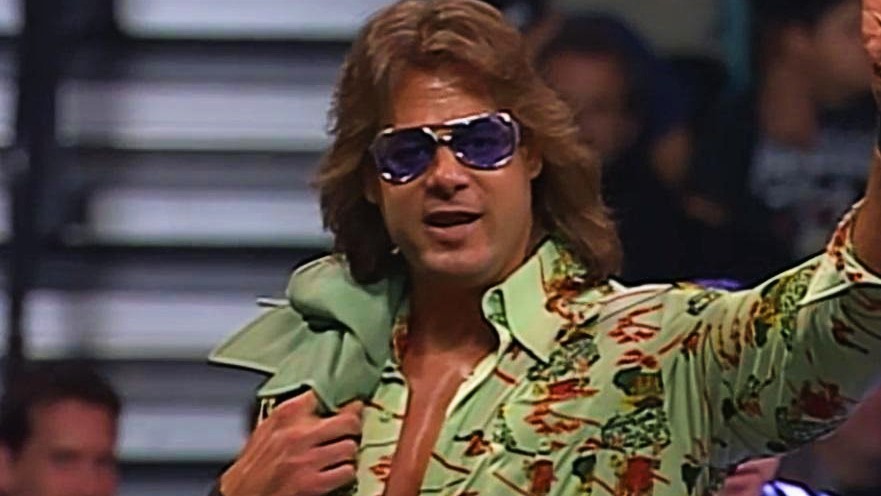
From Terry Taylor’s Red Rooster to WCW turning Mike Awesome into That ’70s Guy, these talented wrestlers deserved much better gimmicks.
Sometimes the performer was never the problem. From Terry Taylor becoming a human rooster to WCW turning Mike Awesome into a comedy character, these talented wrestlers were saddled with gimmicks that hid everything they did well.
A bad wrestler can make a good gimmick fail, but professional wrestling has also produced the opposite problem. Talented performers have occasionally been given characters so poorly suited to their strengths that the audience never gets a fair opportunity to see what made them valuable in the first place.
That is different from simply having a bad gimmick. Plenty of wrestlers have made terrible ideas work through charisma, commitment or sheer stubbornness, while others escaped an unsuccessful character and eventually found something better. The wrestlers on this list had already demonstrated significant ability elsewhere before promoters decided they needed an entirely different identity.
In several cases, the makeover removed exactly what had made the wrestler successful. A serious athlete became a comedy character, an established talker was forced into scripted shtick and a physically intimidating heavyweight suddenly found himself wearing clothes that made it impossible to take him seriously.
The ranking considers the wrestler’s proven talent, the gap between that talent and the gimmick, and how much the presentation damaged that particular stage of the performer’s career. It is not necessarily a judgment on the wrestler’s entire legacy; some recovered once they escaped the character.
Others never completely did.
These are the Top 5 great wrestlers ruined by the wrong gimmick.
#5 — Barry Darsow Becomes Repo Man
Barry Darsow had already demonstrated that he understood how to play a convincing wrestling character before WWE turned him into Repo Man.
As Smash of Demolition, Darsow had been part of one of WWE’s defining tag teams of the late 1980s. Demolition looked dangerous, wrestled aggressively and carried enough credibility to work against everyone from The Hart Foundation and British Bulldogs to Andre the Giant and The Powers of Pain.
When Demolition ended, WWE did not simply allow Darsow to become a singles version of the same intimidating wrestler. He returned in 1991 wearing a mask, oversized trench coat and tire-tread-style gear as Repo Man, a sneaky repossession agent who stole possessions from wrestlers he claimed had failed to make their payments.
The problem was not that Darsow lacked commitment. He prowled around the ring, laughed maniacally and leaned fully into the cartoon villainy. WWE even built a program around Repo Man stealing Randy Savage’s hat, which at least gave the character something specific to do.
The larger issue was what had disappeared.
Smash looked like someone who could hurt people. Repo Man looked like someone who might steal a lawn mower after midnight.
WWE’s own retrospective has since included Repo Man among the company’s most absurd characters, while Darsow’s biography places the gimmick alongside the many identities he adopted throughout a long career. That versatility deserves credit, but Repo Man represented a dramatic step backward from the credibility he had possessed only a few years earlier.
Darsow remained a capable professional wrestler underneath the coat.
The gimmick simply made that the least interesting thing about him.
#4 — Shane Douglas Becomes Dean Douglas
Shane Douglas entered WWE in 1995 at almost exactly the wrong time with almost exactly the wrong character.
Only a year earlier, Douglas had created one of the defining moments in ECW history by winning the NWA World Heavyweight Championship, throwing the belt down and declaring himself champion of a new era. Whatever anyone thought about Douglas personally, the performance established that he could talk with confidence, carry himself like an important wrestler and make an audience believe he had something worth saying.
WWE transformed him into a teacher.
Dean Douglas wore academic robes, stood beside a chalkboard and graded other wrestlers’ performances as though Monday Night Raw had suddenly added parent-teacher conferences. He carried a paddle called the Board of Education and delivered deliberately condescending lectures about the supposed mistakes of his opponents.
There was logic buried inside the idea. Douglas had actually worked as a teacher, and an arrogant intellectual heel could absolutely succeed in professional wrestling.
The problem was that this particular wrestler had already discovered a much better version of himself.
ECW’s Shane Douglas was brash, angry and believable because his arrogance felt personal. Dean Douglas turned those qualities into a costume, forcing a strong talker to spend his television time drawing grades on a chalkboard instead of speaking with the intensity that had helped establish The Franchise.
His WWE run included victories over wrestlers such as Razor Ramon and a brief Intercontinental Championship reign, but the character never felt remotely as important as the performer had before arriving. Injuries and backstage issues complicated the run further, and Douglas was gone from the company within months.
He eventually returned to ECW and again became one of the promotion’s central figures.
That contrast tells the story. WWE did not need to invent Shane Douglas. Shane Douglas had already done that himself.
#3 — Tony Atlas Becomes Saba Simba
Tony Atlas had already made history in WWE before the company apparently decided audiences needed to pretend he was somebody else.
Atlas was a former Mr. USA bodybuilder and one of wrestling’s most impressive powerhouses during the late 1970s and 1980s. Alongside Rocky Johnson, he became part of the first Black team to win WWE’s World Tag Team Championship, giving him a legitimate place in the company’s history before his initial run ended.
When Atlas returned in 1990, WWE repackaged the Virginia-born wrestler as Saba Simba, a supposed Ugandan warrior.
The presentation included a spear, shield, feathered headdress and tribal dancing. Rather than emphasizing the physique, strength and established identity that had once made Atlas a major attraction, WWE buried him underneath a broad African stereotype that immediately felt disconnected from the actual person performing it.
Even the commentary struggled to maintain the illusion.
Roddy Piper openly identified Saba Simba as Tony Atlas during his television debut and questioned why the established wrestler was appearing under the new identity. WWE’s own later retrospective has asked essentially the same question, describing Atlas as a Hall of Famer and former tag champion whose warrior costume made it difficult to take him seriously despite his remaining physical ability.
The character did not last.
Atlas appeared in the 1991 Royal Rumble but disappeared from regular WWE television shortly afterward, ending a comeback that might have offered significantly more value if the company had simply presented him as Tony Atlas.
The gimmick is especially frustrating because nothing needed fixing.
Atlas already possessed history, credibility and a recognizable name. WWE discarded all three to create a character that immediately required explanations.
Sometimes repackaging can revive a career. Saba Simba demonstrates what happens when repackaging erases one instead.
#2 — Terry Taylor Becomes The Red Rooster
Terry Taylor may be the most famous example of a talented wrestler becoming permanently associated with a terrible gimmick.
Before arriving in WWE, Taylor had built a strong reputation throughout the territories. He worked successfully in Mid-South, the UWF, World Class and other promotions, earning praise for his technical ability and developing enough credibility that many observers viewed him as someone capable of becoming a significant national star.
WWE eventually paired him with Bobby Heenan. That should have worked.
Heenan specialized in making wrestlers feel important, and Taylor possessed enough in-ring ability to support an arrogant heel character. Instead, the relationship became the foundation for The Red Rooster.
Taylor began wearing red gear, styling a strip of his hair upward and dyeing it red to resemble a rooster’s comb. He strutted like a chicken, incorporated bird references into interviews and eventually carried the character into a babyface feud against Heenan.
The gimmick became stronger than the wrestler in the worst possible way.
Fans who never saw Taylor’s earlier work came to know him primarily as the man pretending to be a rooster. WWE itself has acknowledged the problem in multiple historical retrospectives, describing Taylor as a gifted ring general whose Red Rooster transformation prevented him from reaching the level many expected.
That is what separates Taylor from plenty of wrestlers who merely received silly characters. The Red Rooster altered his legacy.
Decades later, discussions about Terry Taylor’s career still frequently begin with the gimmick rather than his strongest matches or accomplishments. The character became so infamous that it overshadowed evidence that the wrestler underneath had been considerably better than the presentation suggested.
Taylor did everything professional wrestlers are traditionally told to do when handed difficult material. He committed, performed the character and tried to make the idea work.
The idea won anyway.
Honorable Mention — Dusty Rhodes and the Polka Dots
Dusty Rhodes is the exception that proves the entire premise of this article.
When The American Dream arrived in WWE in 1989, he was already one of the most important professional wrestlers of his generation. Rhodes had been an NWA World Heavyweight Champion, major territorial attraction, influential booker and one of wrestling’s greatest talkers.
WWE put him in yellow polka dots.
The company also emphasized his “Common Man” persona through comedy vignettes showing Rhodes performing working-class jobs such as plumbing and garbage collection. The presentation seemed almost deliberately removed from the serious main-event figure who had battled Ric Flair and helped define Jim Crockett Promotions.
Members of the Rhodes family have openly acknowledged the perception that the presentation was a joke at Dusty’s expense. Dustin Rhodes later said he viewed the polka dots as a rib but emphasized the most important part of the story: his father made them work.
That is why Dusty only receives the honorable mention. The gimmick did not ruin him. He beat it.
Rhodes remained enormously charismatic, became popular with WWE audiences and turned the ridiculous outfit into another recognizable chapter of an already legendary career. Instead of the polka dots diminishing Dusty Rhodes, Dusty Rhodes eventually gave the polka dots credibility.
Very few wrestlers on this list were powerful enough to reverse the relationship.
#1 — Mike Awesome Becomes The Fat Chick Thriller and That ’70s Guy
Mike Awesome entered WCW looking like somebody a wrestling promoter should have found extremely difficult to misuse.
He was approximately 6-foot-6 and nearly 300 pounds, yet moved with the speed and athleticism of someone considerably smaller. In ECW, Awesome had become a terrifying heavyweight capable of delivering enormous powerbombs, flying over the top rope and wrestling the kind of physical matches against Masato Tanaka that made his combination of size and athleticism feel genuinely unusual.
WCW signed him in 2000 while he was still ECW World Heavyweight Champion.
Within months, he was chasing large women and wearing a leisure suit.
The first major derailment was The Fat Chick Thriller, a comedy gimmick built around Awesome suddenly becoming obsessed with plus-sized women. Whatever intimidating presence he had established as a heavyweight monster became secondary to jokes about the women accompanying him.
Awesome himself later described the gimmick as stupid and said he wondered whether WCW was trying to make him quit. Then WCW changed him again.
That ’70s Guy dressed Awesome in retro clothing, gave him a Partridge Family-style bus and placed him behind the desk of an interview segment called the Lava Lamp Lounge. The wrestler who had recently been throwing people through tables in ECW was now wearing colorful leisure suits and delivering intentionally dated pickup lines.
The mismatch was almost perfect in its awfulness.
Awesome was not a natural comedy wrestler whose personality needed a more colorful platform. His appeal was that somebody his size should not have been capable of moving the way he did. Every minute spent explaining his affection for 1970s culture was a minute WCW was not presenting one of the more physically distinctive heavyweight wrestlers available anywhere.
That is what puts him above Terry Taylor. The Red Rooster damaged the perception of a talented wrestler, but Taylor at least entered WWE at a point when much of the national audience had not seen his best work.
WCW had much less excuse with Awesome. He arrived carrying the ECW World Championship and the reputation of being a dangerous heavyweight. Wrestling fans already knew what worked. WCW changed it anyway.
By the time the gimmicks ended, Awesome’s aura had largely disappeared. He remained capable of excellent matches and later reminded audiences of his talent during appearances such as his ECW One Night Stand match with Masato Tanaka in 2005.
That performance produced the most frustrating question possible. Why was anyone trying to make this guy funny?
Professional wrestling constantly searches for the next great character, which makes creative experimentation necessary. The danger comes when the search for a gimmick becomes more important than recognizing what is already standing in front of the promoter.
Barry Darsow had proven he could look intimidating before WWE put him in a burglar mask. Shane Douglas had already discovered an effective personality before being sent to a chalkboard, while Tony Atlas returned with enough history that pretending he had suddenly become a Ugandan warrior only made his established identity harder to use.
Terry Taylor suffered perhaps the greatest long-term damage because The Red Rooster became permanently attached to his name. The gimmick did not merely fail to elevate him; it changed how generations of fans understood his entire career.
Dusty Rhodes escaped that fate because Dusty was simply too charismatic to be embarrassed by polka dots. He turned a questionable presentation into something audiences embraced, demonstrating that an extraordinary performer can occasionally overpower almost any creative decision.
Mike Awesome never received the same opportunity. WCW inherited a giant who could fly and somehow concluded that the missing ingredient was a leisure suit. That is the difference between creating a character and getting in a wrestler’s way. The best gimmick for Mike Awesome was Mike Awesome.
Research included archival material from WWE.com and historical reporting and interviews covering Terry Taylor’s Red Rooster run, Tony Atlas as Saba Simba, Barry Darsow as Repo Man, Shane Douglas’ 1995 WWE run, Dusty Rhodes’ polka-dot presentation and Mike Awesome’s WCW gimmicks.
Chairshot Radio Network
Launched in 2017, the Chairshot Radio Network presents you with the best in sports, entertainment, and sports entertainment. Wrestling and wrestling crossover podcasts + the most interesting content + the most engaging hosts = the most entertaining podcasts you’ll find!
MONDAY - Bandwagon Nerds
TUESDAY - 4 Corners Podcast
WEDNESDAY - The Grown Ass Man Podcast
THURSDAY - The Benchwarmers Trivia Podcast
FRIDAY - DWI Podcast (Drunk Wrestling Intellect)
SATURDAY - The Mindless Wrestling Podcast
SUNDAY - 30 Mindless Minutes
CHAIRSHOT RADIO NETWORK PODCAST SPECIALS
Attitude Of Aggression Podcast: The Big Five Project (chronologically exploring WWE's PPV/PLE history) Unidentified History (Ufology) & Game Gone Wrong (Game of Thrones Universe)
Chairshot Radio Network Your home for the hardest hitting podcasts... Sports, Entertainment and Sports Entertainment!
Powered by RedCircle
Let us know what you think on social media @ChairshotMedia and always remember to use the hashtag #UseYourHead!

Chairshot NFL News Report (10/16/2026): Troy Aikman’s ESPN Future Uncertain, Broncos Win in OT & Jalen Hurts Sidelined
Troy Aikman's ESPN future is uncertain, Denver beats Seattle in overtime, and Jalen Hurts is sidelined as NFL Week 6...

Chairshot NFL News Report (10/15/2026): Caleb Nears Return, Harrison Debut Set & Lamar Still Waiting
Caleb Williams moves closer to returning, Marvin Harrison Jr. will debut for Houston and Lamar Jackson remains day-to-day entering Week...

Greg DeMarco’s NFL Power Rankings – Week 5
The 49ers hold on to their lead in Greg DeMarco’s 2026 NFL Power Rankings, followed by the Chiefs, Vikings, and...

Chairshot NFL News Report (10/13/2026): Bills Survive OT, Greenlaw Suspended & Hargrave Done
Buffalo survives the Rams in overtime, Dre Greenlaw draws a suspension and Green Bay loses Javon Hargrave for the season.

Chairshot NFL News Report (10/12/2026): Ravens Win in OT, Texans Land Harrison & Jaguars Stun Eagles
Baltimore wins in overtime without Lamar Jackson, Houston trades for Marvin Harrison Jr. and Jacksonville shocks Philadelphia in London.

Bandwagon Nerds News Report (10/16/2026): Netflix Changes Chiefs, Fourth Wing Finds Its Leads & Crystal Lake Opens
Netflix replaces Bela Bajaria with Peter Rice, Fourth Wing casts Violet and Xaden, and Friday the 13th returns with Crystal...

Bandwagon Nerds News Report (10/13/2026): Miami Vice Returns, No Man’s Sky Goes Mobile & VisionQuest Arrives
Miami Vice ’85 reveals Crockett and Tubbs, No Man’s Sky heads to iPhone and VisionQuest arrives early on Disney+.
Bandwagon Nerds #362: Stars, Dirt & Ditka
The Nerds discuss the season finale of Lanterns and Patrick gathers his thoughts to describe his mixed feelings about the...

Bandwagon Nerds News Report (10/12/2026): Artemis Fowl Gets Another Shot, Other Mommy Wins & Wildwood Stuns
Artemis Fowl returns as an animated series, Other Mommy wins the box office and Laika’s Wildwood earns raves at its...


30 Mindless Minutes: Michael Bay back with Transformers?
Take your mind off of things, for 30 minutes.

Andrew’s JCW Lunacy Results & Ratings: Ep# 103
Mr Happy debuts baby Pooey! 2 title matches: Bunkhouse brawl for tag titles & Josh Bishop defends his Heavyweight title...

Chairshot Top 5: Great Wrestlers Ruined by the Wrong Gimmick
From Terry Taylor’s Red Rooster to WCW turning Mike Awesome into That ’70s Guy, these talented wrestlers deserved much better...

Today In Pro Wrestling History: October 16th
Relive modern wrestling history: from Joe vs. Punk II and Sting vs. Hogan to Dragon Gate, SmackDown 1000, and AJPW’s...

Chairshot NFL: Football in the Bank?
Don't drink and drive, drink and podcast! Join DP and PC weekly for their thoughts on RAW, SmackDown and every...

Chairshot Wrestling News Report (10/16/2026): Trey Miguel Earns World Title Shot, Hardys Take Over Impact & AEW Loses a Title Match
Trey Miguel earns a TNA World Title match, the Hardys take over Impact, Jamie Hayter misses WrestleDream, and SmackDown brings...

Andrew’s TNA iMPACT! Results & Match Ratings: 10.15.2026
The celebration of the Hardys 35th year in wrestling, they got the book! Let's see who they screw over!

Chairshot Top 5: Wrestlers Who Succeeded Despite a Terrible Name
Dolph Ziggler hated his name, and he wasn't alone. These five wrestlers became major stars despite names that sounded terrible...

Today In Pro Wrestling History: October 15th
Pro Wrestling History: From WCWA Cotton Bowl & TNA iMPACT! to WWE Raw's Shield reunion, AAA TripleMania XXX & NEW,...


Axe Bomber Podcast #005 – They Took His Paul Heyman Away
Greg DeMarco and Andrew Balaz cover TNA Bound for Glory, WWE Money in the Bank, WrestleMania ticket revenue, MLW, JCW...

Chairshot Wrestling News Report (10/15/2026): Copeland Announces Final Year, Clockwork Carnage Set & Shotzi Heads to TNA
Adam Copeland announces his final wrestling year, AEW completes its WrestleDream main event, and Shotzi reportedly signs with TNA.