Sports Entertainment
Chairshot Top 5: Worst WWE Entrance Themes Ever
From Brie Mode and X-Factor to Right to Censor’s unbearable alarm, these are five of the worst entrance themes WWE ever played.

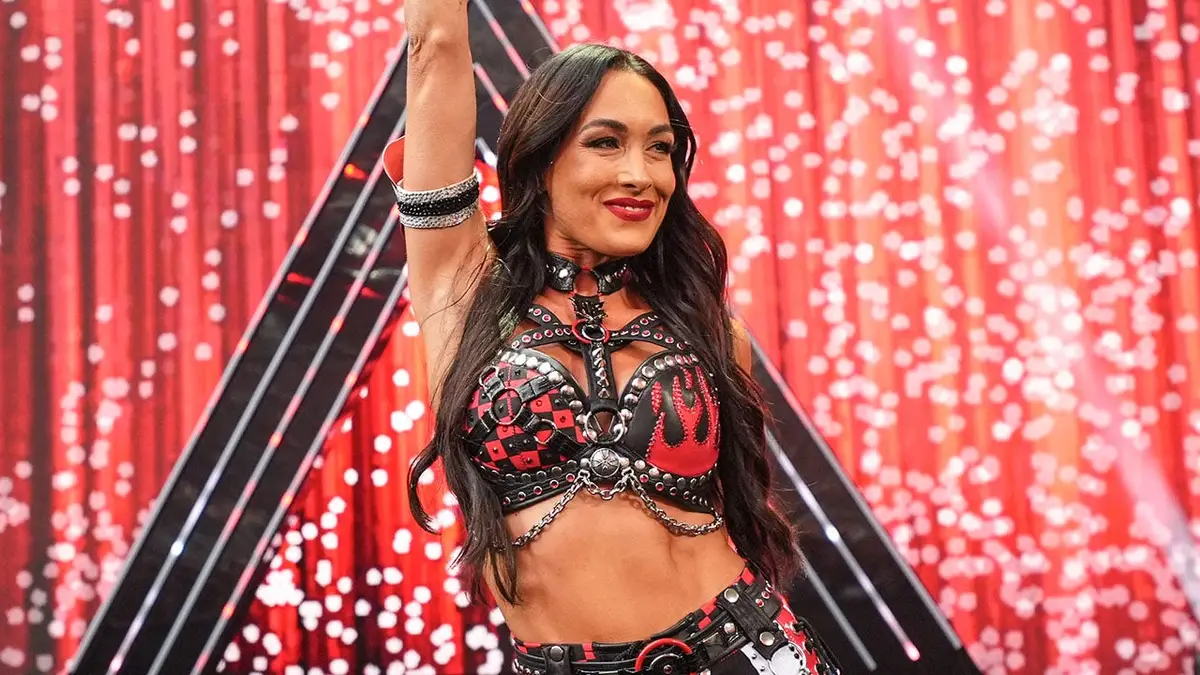
From Brie Mode and X-Factor to Right to Censor’s unbearable alarm, these are five of the worst entrance themes WWE ever played.
A great entrance theme can turn a wrestler’s walk to the ring into an event. A bad one can make the audience wonder who approved the recording. From Jillian Hall deliberately destroying her own song to Right to Censor entering to something that barely qualified as music, these WWE themes became memorable for all the wrong reasons.
Professional wrestling entrance music has one job before anything else: make the audience react when the wrestler appears. The best themes accomplish that within seconds. Breaking glass means Steve Austin, a funeral bell means The Undertaker and the opening guitar of “Real American” immediately creates an entire Hulk Hogan presentation before anyone walks through the curtain.
Bad entrance music can be just as recognizable, but for entirely different reasons. Sometimes the song does not fit the wrestler, sometimes the lyrics sound like they were written several minutes before recording began and occasionally WWE deliberately created something irritating because annoying the audience was part of the gimmick.
That last category makes this ranking slightly complicated. A terrible song can still be effective wrestling music if everyone involved intended it to sound terrible, but effectiveness does not magically make the listening experience enjoyable. Right to Censor successfully irritated arenas everywhere it went, while Jillian Hall’s singing was intentionally awful because believing she was talented was part of her character.
The ranking considers the music itself, how well it functioned as an entrance, how badly it aged and whether the wrestler deserved something better. A theme can be funny, memorable or perfectly appropriate and still belong among WWE’s worst.
These are the Top 5 worst WWE entrance themes ever.
#5 — Brie Bella — “Beautiful Life” / “Brie Mode”
Brie Bella spent years entering WWE alongside Nikki Bella to “You Can Look (But You Can’t Touch),” a theme that fit the Bella Twins well enough to become permanently associated with their act. Then Brie needed something of her own, and the result began with a loud declaration of “Brie Mode!” before launching into an aggressively cheerful dance-pop track that sounded less like the entrance of someone preparing for a wrestling match and more like background music for a reality-show montage.
That connection was not entirely accidental. By the time Brie began using the theme regularly, the Bella Twins had become crossover personalities through Total Divas and eventually Total Bellas. “Brie Mode” was part catchphrase, part lifestyle branding and part extension of the energetic personality Brie presented outside the ring.
As a piece of professional wrestling entrance music, however, it was difficult to take seriously. The opening shout certainly accomplished the first requirement of an entrance theme because everyone immediately knew who was coming, but what followed lacked the tension, aggression or swagger that usually helps entrance music make a wrestler feel important.
That became more noticeable when Brie entered major matches. Her 2014 rivalry with Stephanie McMahon became one of WWE’s featured SummerSlam programs, built around family conflict, corporate power and weeks of personal hostility, yet Brie would walk toward an emotional confrontation while music essentially announced that everyone should start having fun.
The contrast was remarkable, but Brie’s popularity allowed the entrance to survive. The phrase eventually became part of her identity strongly enough that WWE still uses “Brie Mode” when referencing her appearances, proving that recognition and quality are not always the same thing.
Sometimes an entrance theme becomes iconic because it is excellent. Sometimes people simply hear it enough times that resistance becomes pointless.
#4 — Rob Conway — “Just Look at Me”
Rob Conway’s post-La Résistance singles presentation desperately wanted the audience to understand that Rob Conway thought Rob Conway looked fantastic. The entrance theme refused to leave anything to interpretation.
“Just Look at Me” accompanied Conway after WWE separated him from the French-sympathizer tag-team character and reinvented him as an arrogant singles wrestler obsessed with his appearance. Conway wore sunglasses, displayed his physique and carried himself like someone convinced everyone in the building should immediately recognize his star power, while the song repeatedly reinforced that message with all the subtlety of someone pointing toward himself while standing in front of a mirror.
There is nothing inherently wrong with entrance music explaining a wrestling character. Shawn Michaels’ “Sexy Boy” is essentially several minutes of Michaels telling everyone how attractive he is, and that song became one of WWE’s greatest themes because the music, personality and performer all worked together. Conway’s theme demonstrated how easily the same formula can go wrong.
Instead of sounding arrogantly cool, “Just Look at Me” felt like a parody of wrestling entrance music. The production was generic, the lyrics were painfully literal and the entire presentation asked Conway to project superstar confidence while his song seemed determined to convince the audience of something they had not yet decided for themselves.
WWE later included Conway in its own collection of the lamest entrance themes, describing the music as leaving “something to be desired.” That is diplomatic, especially for a wrestler who was solid enough in the ring but never received enough momentum for the singles character to become established.
An entrance theme capable of making Conway feel bigger might have helped. Instead, the music spent every entrance insisting everyone look at him without providing much reason why.
#3 — Jillian Hall — “Sliced Bread”
Jillian Hall’s entrance theme was supposed to sound terrible, and WWE accomplished that mission with remarkable efficiency.
The Jillian character evolved into a parody of an aspiring pop singer who believed she possessed a magnificent voice despite overwhelming evidence to the contrary. She would grab microphones and subject audiences to deliberately off-key performances while reacting as though she had just finished headlining an arena concert, eventually leading WWE to allow Jillian to sing her own entrance theme.
“Sliced Bread” took the joke from live segments and turned it into something arenas had to play every time she wrestled. WWE openly leaned into the premise, with its own profile describing Jillian as tone-deaf and joking about the suffering inflicted on fans and sound systems once she decided to record her entrance music.
That creates an unusual ranking problem because, as character work, the theme is actually excellent. Jillian was supposed to believe she was an extraordinary singer, so having her perform a legitimately polished entrance song would have undermined the joke. The vocals needed to make the audience uncomfortable because the entire point was that Jillian could not understand why everyone else was uncomfortable.
As music someone had to hear repeatedly, the theme becomes considerably harder to defend. There is intentionally bad singing, and then there is intentionally bad singing amplified through an arena sound system while someone walks slowly toward a wrestling ring.
The gimmick even extended beyond television when Jillian recorded the holiday EP A Jingle with Jillian in 2007, committing far more completely to the musical character than anyone could have reasonably expected. That commitment deserves respect, even if the song itself deserves earplugs.
#2 — X-Factor — “What ’Chu Lookin’ At?”
X-Factor might be professional wrestling’s greatest example of a theme song announcing the name of a faction far more confidently than the faction ever justified.
The group formed in WWE during 2001 around X-Pac, Justin Credible and Albert. On paper, there was enough talent involved to produce something useful. X-Pac had years of experience at WWE’s highest levels, Credible had recently been ECW World Heavyweight Champion and Albert was an athletic heavyweight who would eventually enjoy significantly better runs as A-Train and later Tensai.
Then they walked to the ring while Uncle Kracker repeatedly reminded everyone that they were X-Factor. The song, “What ’Chu Lookin’ At?,” contained one particular section that became infamous among wrestling fans because it directly referenced the group. Rather than making X-Factor sound dangerous or important, the lyrics felt strangely defensive, essentially acknowledging that the audience disliked them and asking why everyone was looking at them that way.
That is not exactly the musical foundation of dominance. Great faction themes create unity: the nWo had music that sounded rebellious, D-Generation X had a song explicitly built around rejecting authority and Evolution entered to Motörhead sounding like people who already owned the building.
X-Factor sounded like three guys explaining that everyone needed to stop judging them. The theme also arrived during a period when X-Pac was receiving increasingly negative crowd reactions that eventually contributed to the phrase “X-Pac heat,” and instead of redirecting that hostility into something productive, the song almost appeared to argue with the audience about it.
There is a bizarre charm to the theme now because the whole presentation is so unmistakably early 2000s. Uncle Kracker, X-Pac, synchronized entrance graphics and an aggressively literal faction reference combine into something that could not have emerged from another period.
Nostalgia can make almost anything entertaining. It cannot make this a good entrance theme.
Honorable Mention — Billy & Chuck — “You Look So Good to Me”
Billy Gunn and Chuck Palumbo received exactly the entrance theme their gimmick demanded, which unfortunately meant their gimmick demanded this entrance theme.
The team formed around an intentionally flamboyant presentation built around Billy and Chuck becoming increasingly affectionate with one another while stylist Rico managed their appearance. WWE pushed the implication that the two men were romantically involved before eventually revealing during their infamous commitment ceremony that the relationship had supposedly been a publicity stunt.
“You Look So Good to Me” matched the presentation with bright pop production and lyrics focused almost entirely on physical attraction. Like Jillian Hall’s music, the song deserves some credit for understanding the assignment because nobody could hear the opening and mistakenly believe Kane or Brock Lesnar was about to enter.
The problem is that understanding the assignment does not make the song pleasant. It was sugary, repetitive and deliberately exaggerated to match a presentation that has itself aged awkwardly, with WWE mining comedy from assumptions about the wrestlers’ sexuality in a way that leaves both the gimmick and music feeling much more uncomfortable decades later.
Billy Gunn eventually found another entrance theme in AEW that became beloved for completely different reasons. This one is better remembered as evidence that wrestling music sometimes captures an era a little too accurately.
#1 — Right to Censor — The Alarm
Calling Right to Censor’s entrance sound a song requires generosity. There is no memorable guitar riff, no chorus and essentially no melody; the group entered while a shrill electronic alarm repeated over and over again, creating the auditory equivalent of standing beneath a smoke detector that had decided it hated professional wrestling.
That was exactly the point. Right to Censor emerged in 2000 as a parody of organizations and critics attacking WWE’s increasingly explicit Attitude Era content. Stevie Richards led a group dressed in conservative white shirts and ties that attempted to censor sexuality, violence and other behavior it considered inappropriate.
Everything about the presentation was designed to make the audience dislike them, and the entrance sound may have been the most effective part. Wrestling themes normally make fans excited when the opening hits, but Right to Censor reversed the entire concept by training audiences to become irritated before anyone appeared.
The alarm was impossible to enjoy and even harder to ignore, which makes it technically brilliant wrestling production and absolutely terrible entrance music. There is an argument that something deliberately annoying should not qualify for a ranking of bad themes because it accomplished exactly what WWE wanted, but that gives the song too much protection.
A bad movie made badly on purpose is still difficult to watch, and an entrance theme specifically engineered to make people want the noise to stop remains an entrance theme people want to stop. The presentation became even more effective because Right to Censor appeared frequently during its relatively short run, with Richards recruiting Bull Buchanan, The Goodfather, Val Venis and eventually Ivory.
Fans did not need graphics or an announcer to identify the group. They heard several seconds of unbearable electronic noise and immediately knew who was responsible.
That is outstanding branding and horrific music. No WWE entrance theme has ever succeeded more completely at being something nobody wanted to hear.
The greatest wrestling themes create anticipation because audiences want to hear them. The worst occasionally become just as recognizable because audiences have spent years wondering why anyone thought they were a good idea.
Brie Bella’s “Brie Mode” presentation became strongly attached to her personality without ever sounding particularly appropriate for a serious wrestling match. Rob Conway’s theme tried so hard to establish his arrogance that it began sounding like the song itself was insecure, while Jillian Hall deliberately turned bad singing into character development.
X-Factor occupies its own strange historical space because the theme managed to sound dated almost immediately. The faction never reached the prominence its music seemed determined to announce, leaving Uncle Kracker’s lyrics considerably more memorable than most of the group’s actual accomplishments.
Right to Censor ultimately wins because WWE discovered something almost ingenious: entrance music did not have to entertain anybody. It could simply punish them.
The alarm fit the characters, generated an immediate response and became unmistakably associated with the faction. By every functional standard, it was a successful wrestling theme, but by the considerably simpler standard of whether anyone would willingly listen to it after the wrestlers left the arena, it may be WWE’s worst entrance music ever.
Research included archival and historical material from WWE.com covering WWE entrance-music history, Rob Conway’s singles entrance, Jillian Hall’s self-recorded “Sliced Bread,” Brie Bella’s presentation and WWE’s own collections of its lamest and most unbearable entrance themes.
Chairshot Radio Network
Launched in 2017, the Chairshot Radio Network presents you with the best in sports, entertainment, and sports entertainment. Wrestling and wrestling crossover podcasts + the most interesting content + the most engaging hosts = the most entertaining podcasts you’ll find!
MONDAY - Bandwagon Nerds
TUESDAY - 4 Corners Podcast
WEDNESDAY - The Grown Ass Man Podcast
THURSDAY - The Benchwarmers Trivia Podcast
FRIDAY - DWI Podcast (Drunk Wrestling Intellect)
SATURDAY - The Mindless Wrestling Podcast
SUNDAY - 30 Mindless Minutes
CHAIRSHOT RADIO NETWORK PODCAST SPECIALS
Attitude Of Aggression Podcast: The Big Five Project (chronologically exploring WWE's PPV/PLE history) Unidentified History (Ufology) & Game Gone Wrong (Game of Thrones Universe)
Chairshot Radio Network Your home for the hardest hitting podcasts... Sports, Entertainment and Sports Entertainment!
Powered by RedCircle
Let us know what you think on social media @ChairshotMedia and always remember to use the hashtag #UseYourHead!

Greg DeMarco’s NFL Power Rankings: Jaguars Take Over No. 1 After Week 9
Jacksonville takes over No. 1 in Greg DeMarco's NFL Power Rankings after Week 9, while Buffalo surges and Minnesota takes...

Chairshot NFL News Report (11/11/2026): Kirk Cousins Returns to Vikings as NFL Trade Deadline Reshapes Contenders
Kirk Cousins returns to Minnesota, the Chiefs acquire Josh Downs, and Buffalo adds Amani Hooker. Full NFL trade deadline analysis...


4 Corners Podcast: Getting Bullish About the Bears!
The 4 Corners Podcast is back as Patrick admits his Bears are quite good and also discuss the favoritism that...

Chairshot NFL News Report (11/10/2026): Jaguars Go All-In, Bills Dominate Vikings & Aiyuk Reinstated
Jacksonville makes three major defensive trades, Buffalo dominates Minnesota, Brandon Aiyuk is reinstated, and injuries hit the Rams and Packers.

Chairshot NFL News Report (11/9/2026): Bears Survive Bucs, Packers Explode & Chargers Stay Winless
Chicago beats Tampa Bay, Green Bay overwhelms New England, and Houston keeps the Chargers winless. Plus Week 9 results, injuries...

Grown Ass Man Podcast #011: I Can’t Speak To AIDS, But Don’t Recommend Cancer
Greg and Patrick talk Bears and Nebraska football, QB hype, unlimited PTO, indie wrestling business, voting, and lessons that come...

Bandwagon Nerds News Report (11/11/2026): Stacy Keach Remembered, Garth Brooks Goes FM & GTA VI Preloads
Remembering Stacy Keach, Garth Brooks plans a Nashville radio station, GTA VI preloads begin, and Marvel Rivals welcomes Nightcrawler and...

Bandwagon Nerds News Report (11/10/2026): DC Changes Leadership, Blade Runner Returns & Streaming Gets Rebundled
James Gunn and Peter Safran exit DC leadership, Blade Runner 2099 unveils its final trailer, and Paramount+ and HBO Max...
Bandwagon Nerds #366: The Four Faces of Bettany
Bandwagon Nerds talks VisionQuest Episode 7 and Paul Bettany's masterful performance. The guys also check out trailers for The Gallerist...

Bandwagon Nerds News Report (11/9/2026): Godzilla Rules, Stranger Things Expands & Bond Contenders Emerge
Godzilla Minus Zero leads the box office, Netflix expands Stranger Things, Bond casting heats up, and World of Warcraft celebrates...

Mitchell’s AEW Dynamite Results & Report! (11/11/26)
West Valley is All Elite!

Today In Pro Wrestling History: November 11th
From Genesis 2007 to Ruff's 2020 shocker and Global Dream 2022, explore how iconic November events in TNA, NJPW, NXT,...

Chairshot Wrestling News Report (11/11/2026): Bronson Reed Hospitalized, Gunther’s Crown Jewel Decision & NXT Shakeup
Bronson Reed remains hospitalized in Saudi Arabia, Gunther reportedly declined Crown Jewel, Mason Rook returns, and NXT champions survive.


Mitchell’s WWE NXT Results & Report! (11/10/26)
Going for gold!

Today In Pro Wrestling History: November 10th
Nitro Rey vs Eddie in '97 to Raw in 2025, look back at wrestling history today, featuring ECW in Schenectady...

Chairshot Wrestling News Report (11/10/2026): Jacob Fatu Returns, WarGames Challenge Issued & Survivor Series Takes Shape
Jacob Fatu returns as Roman Reigns challenges The 946 to WarGames, WWE announces new Survivor Series matches, and John Cena...

RevPro Live In Eastbourne Results (11/8/2026)
Full RevPro Live In Eastbourne results from November 8, 2026, featuring Kanji, Rich Swann, Cameron Khai, Michael Oku and more.


Mitchell’s WWE Raw Results & Report! (11/9/26)
Greenville is Raw!

Today In Pro Wrestling History: November 9th
From the 1997 Montreal Screwjob & TNA 2008 classics to EVOLVE’s 2009 launch, AEW Full Gear 2019, and MLW Lucha...

Chairshot Wrestling News Report (11/9/2026): Tiffany Stratton Cashes In, Roman Reigns Triumphs & AEW Crowns New Champion
Tiffany Stratton cashes in at Crown Jewel, Roman Reigns defeats Sami Zayn, Tommaso Ciampa wins AEW gold, and four titles...