Sports Entertainment
Chairshot Top 5: Wrestlers Who Succeeded Despite a Terrible Name
Dolph Ziggler hated his name, and he wasn’t alone. These five wrestlers became major stars despite names that sounded terrible on paper.

A great wrestling name can create a star before the bell rings, while a terrible one can make a talented performer sound like a cartoon character, television program or rejected video-game creation. These wrestlers succeeded so completely that fans eventually stopped noticing how questionable their names actually were.
Professional wrestling names operate by their own rules. Nobody questions names such as The Undertaker or “Stone Cold” Steve Austin anymore because decades of success have transformed them from character names into universally recognized identities, but that kind of familiarity can hide a lot.
Once a wrestler wins championships, headlines WrestleMania or stays on television for twenty years, the audience stops hearing the name the way it sounded on the first day. Familiarity turns questionable choices into established brands, and eventually suggesting that the name was strange begins to feel almost sacrilegious.
That does not mean the original name was good. This ranking requires separating the wrestler from everything accomplished afterward and imagining the moment someone first proposed the name. Would it immediately sound like a future world champion, or would most people assume creative had approximately fifteen minutes before a meeting and desperately needed something to write on a piece of paper?
In at least one case, that is almost exactly what happened. These are the Top 5 wrestlers who succeeded despite a terrible name.
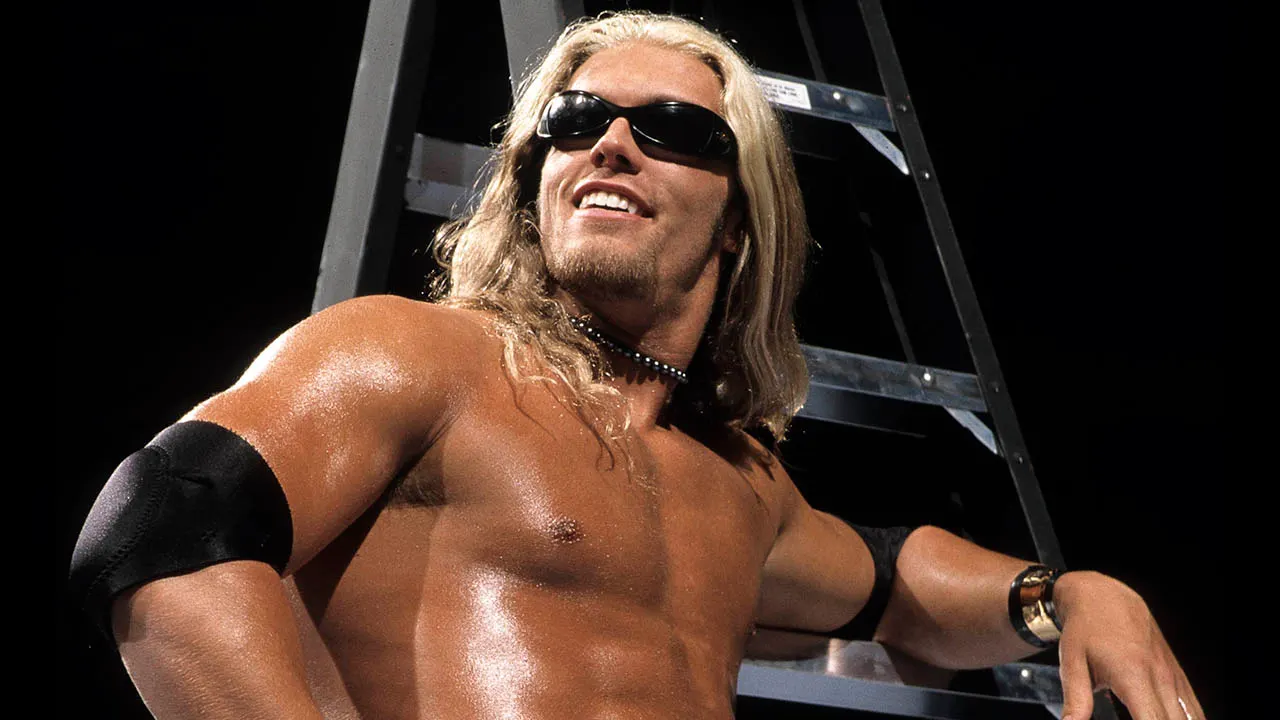
#5 — Edge
Edge is a fantastic name after more than twenty-five years of hearing it attached to Adam Copeland. Before that, it was just a noun.
Copeland has explained that he came up with the name while driving with Don Callis and hearing a radio station using “Edge” in its branding. WWE was considering other appropriately late-1990s options such as Rage and Riot, and Copeland thought Edge carried enough of the alternative-rock feeling he wanted. That context explains the choice, but it does not necessarily improve it.
Imagine somebody arriving at wrestling school today and announcing that his ring name is Edge. The immediate follow-up question would probably involve asking whether there was supposed to be another word. Edge of what?
The name benefited enormously from WWE’s presentation. Copeland debuted in 1998 as a mysterious loner walking through crowds, which gave the one-word identity a little more credibility than it would have possessed on its own. Christian soon arrived, The Brood formed and Edge gradually became a familiar enough name that the oddness disappeared.
Then Copeland did the rest. By the time he became the Rated-R Superstar, the word Edge carried its own wrestling meaning. Money in the Bank cash-ins, TLC matches, world championships and his opportunistic heel persona gave the name characteristics that had never existed when it was merely something heard on the radio.
Copeland himself has admitted he would have preferred using Adam Copeland under different circumstances, which may be the strongest argument for including him here. Edge became one of wrestling’s best names because Adam Copeland became Edge; the original word did very little of the work.
#4 — R-Truth
R-Truth sounds perfectly normal now because Ron Killings has spent so many years saying it with complete confidence. Remove him from the equation and things become considerably shakier.
Killings returned to WWE in 2008 after previously wrestling for the company as K-Kwik. During his years away he had achieved significant success under his real name, including becoming a world champion in TNA, so WWE understandably wanted something new for his return.
According to Killings, he sat with Vince and Stephanie McMahon while they considered names beginning with the letter R. Stephanie suggested R-Truth, Vince liked it and then immediately asked the obvious question: What does the R stand for?
Nobody really had an answer, which is an extraordinary foundation for a wrestling name that survived for nearly two decades. R-Truth sounds like an abbreviation for something the audience was never told, combined with a noun that feels vaguely inspirational. It is the type of name a fictional wrestler might receive in a television show attempting to avoid infringing on a real wrestler.
Killings somehow made it work through force of personality. His charisma was strong enough to turn the name into something rhythmic, while his “What’s Up?” entrance helped attach music and movement to it. His later transformation into one of WWE’s most consistently entertaining comedy performers made R-Truth feel less like a constructed ring name and more like the natural identity of an unpredictable person who happened to exist in WWE.
The accomplishments should not be overlooked either. Truth challenged John Cena for the WWE Championship, won the United States Championship, captured tag-team gold and eventually became the wrestler most associated with the 24/7 Championship. By that point nobody cared what the R meant, and perhaps that was the secret all along.
#3 — Big Show
Andre the Giant is a wrestling name. Big Show sounds like something scheduled for Saturday night at the civic center.
Paul Wight arrived in WCW as The Giant, which was hardly the most imaginative name in wrestling history but at least had precedent. The name communicated exactly what promoters wanted audiences to understand about a performer who stood approximately seven feet tall and immediately looked different from nearly everyone around him.
Then Wight signed with WWE in 1999 and initially appeared under his real name before becoming Big Show. Not The Big Show. Big Show.
That missing article has always made the name slightly stranger. Calling someone “The Big Show” would at least suggest that the enormous wrestler was himself the attraction everyone had paid to see. “Big Show” sounds like two words someone wrote while brainstorming the concept and accidentally submitted as the finished product.
Wight succeeded so thoroughly that the problem disappeared. The name eventually fit because his size made everything involving him feel larger, while WWE promoted him as the World’s Largest Athlete. His career accumulated enough championships and high-profile opponents that Big Show became a recognizable proper noun instead of an awkward description.
He won the WWE Championship, World Heavyweight Championship and ECW Championship after already becoming WCW Champion. He wrestled everyone from Hulk Hogan and Steve Austin to The Undertaker, John Cena, Brock Lesnar and Roman Reigns.
That kind of longevity creates linguistic immunity. After enough years, nobody hears “Big Show” and thinks about grammar; they picture Paul Wight, which means the name ultimately won.
#2 — Triple H
Triple H might be the greatest example of professional wrestling successfully turning an abbreviation into a human being.
The name makes sense only because there was something before it. Paul Levesque entered WWE in 1995 as Hunter Hearst Helmsley, an aristocratic character from Greenwich, Connecticut, obsessed with manners, wealth and his own superiority. The deliberately pretentious three-part name fit the Connecticut Blueblood gimmick almost perfectly.
Then the character changed. Helmsley joined Shawn Michaels in D-Generation X and gradually abandoned nearly every part of his original presentation. The expensive robes disappeared, the aristocratic affectations vanished and WWE needed a way to acknowledge the existing identity without continuing to call a rebellious degenerate Hunter Hearst Helmsley.
Triple H solved that problem, but it is still ridiculous when examined independently. The name is literally a description of how many Hs existed in his previous wrestling name, which should not sound intimidating and certainly should not sound like someone who would become a fourteen-time world champion, headline WrestleMania repeatedly, wield a sledgehammer, call himself The Game and eventually become one of the most influential executives in professional wrestling.
Yet Triple H eventually sounded completely natural. That transformation came partly because the abbreviation matched the increasingly stripped-down character. Hunter Hearst Helmsley sounded elaborate; Triple H sounded harder and faster. As Levesque moved from DX into his main-event heel run, even the name seemed to lose any association with the snobbish character that created it.
WWE history became filled with combinations that would have sounded absurd in 1995: Triple H versus The Rock, Triple H versus Steve Austin, Triple H versus The Undertaker and Triple H versus Shawn Michaels. Eventually, repetition created legitimacy, and the wrestler became important enough that three letters no longer needed to make sense.
They simply meant him.
Honorable Mention — The Miz
“The Miz” existed before WWE because Mike Mizanin created the persona during his time on reality television, but that does not make the name less strange.
Mizanin developed The Miz as an exaggerated alter ego on MTV’s The Real World, using the character when he wanted to display more confidence and aggression than he normally showed. When he pursued professional wrestling, the nickname came with him.
There is logic behind it because “Miz” is an obvious shortening of Mizanin. The problem is that adding “The” transforms a childhood-style nickname into something that sounds suspiciously like an object. The Miz. The what?
Early WWE presentation did not help. Mizanin entered the company carrying substantial reality-television baggage, and fans as well as wrestlers initially questioned whether he genuinely belonged in professional wrestling. The name could easily have reinforced that perception.
Instead, Miz leaned into everything people disliked. He became obnoxious, loud, self-promotional and relentlessly committed to proving he belonged, eventually turning the strange reality-show nickname into the identity of a WWE Champion, WrestleMania main eventer, Intercontinental Champion and one of the most dependable television performers of his generation.
“The Miz” should probably still sound ridiculous. Mike Mizanin simply spent twenty years preventing anyone from saying so with a straight face.
#1 — Dolph Ziggler
Nobody needs to make the case against Dolph Ziggler’s name better than Dolph Ziggler himself.
Nic Nemeth had already survived multiple WWE identities before receiving the name that would define most of his career. He had appeared as Kerwin White’s caddie and then as Nicky in the Spirit Squad before being repackaged again in 2008.
WWE initially proposed something even worse: David Diggler. Nemeth has recalled receiving a call telling him he was returning to television and would be given that name. He objected and was told he had only minutes to suggest alternatives while creative went into a meeting.
Dolph emerged partly from his family history and his familiarity with Dolph Lundgren, while Ziggler eventually replaced Diggler. Nemeth still hated it and later remembered approaching Vince McMahon to argue that Dolph Ziggler sounded like a cartoon wrestling name. McMahon reportedly viewed that as an advantage because people would remember it.
Both men were correct. The name sounds ridiculous, but it is also almost impossible to forget.
“Dolph” was uncommon enough to immediately stand out, while “Ziggler” sounded manufactured even within an industry where people willingly called themselves The Undertaker and Ultimate Warrior. Put them together and the result resembled a fictional villain appearing in a wrestling movie.
Then the bell rang.
Ziggler became one of WWE’s best athletes and most reliable performers. His ability to make opponents’ offense look devastating earned enormous respect, while his own style became increasingly polished as he moved from developmental curiosity to Intercontinental Champion and eventually World Heavyweight Champion.
The peak came on the Raw after WrestleMania 29 when Ziggler cashed in Money in the Bank against Alberto Del Rio. The audience reaction demonstrated just how completely Nemeth had overcome everything awkward about the presentation WWE originally gave him.
Fans were not chanting for Nic Nemeth; they were losing their minds for Dolph Ziggler.
He ultimately spent approximately fifteen years using the name while winning multiple Intercontinental, United States and tag-team championships in addition to his world-title success. That longevity created the same phenomenon seen elsewhere on this list, where the name stopped sounding stupid because the wrestler became too successful for the audience to keep questioning it.
After leaving WWE, Nemeth returned to using his real name, which provided one final reminder of just how strange Dolph Ziggler always was. Nic Nemeth sounds like an athlete. Dolph Ziggler sounds like someone invented by professional wrestling.
Fortunately, professional wrestling was exactly where he needed to be.
A terrible wrestling name creates an immediate disadvantage, but professional wrestling has always offered one reliable way to overcome it: become too good for anyone to care.
Edge turned an ordinary noun into a Hall of Fame identity. R-Truth survived a name whose first letter never received a meaningful explanation, while Big Show spent decades making two awkwardly connected words sound completely normal.
Triple H accomplished something even stranger by transforming an abbreviation of a discarded character into one of wrestling’s most recognizable names. The Miz carried an alter ego from reality television into WrestleMania and eventually made the nickname inseparable from Mike Mizanin.
Dolph Ziggler remains the ultimate example because even the wrestler wearing the name immediately understood the problem. He thought it sounded like a cartoon, and he was not wrong.
What Nemeth proved over the next fifteen years was that audiences eventually stop laughing at a name once enough championships, great matches and memorable moments become attached to it. That might be the real test of a professional wrestler: a good name can help create a star, but a great performer can rescue a terrible one.
Research included archival and historical material from WWE.com, interviews with Nic Nemeth, Adam Copeland and R-Truth, and reporting from Fightful, and Wrestling Inc.
Chairshot Radio Network
Launched in 2017, the Chairshot Radio Network presents you with the best in sports, entertainment, and sports entertainment. Wrestling and wrestling crossover podcasts + the most interesting content + the most engaging hosts = the most entertaining podcasts you’ll find!
MONDAY - Bandwagon Nerds
TUESDAY - 4 Corners Podcast
WEDNESDAY - The Grown Ass Man Podcast
THURSDAY - The Benchwarmers Trivia Podcast
FRIDAY - DWI Podcast (Drunk Wrestling Intellect)
SATURDAY - The Mindless Wrestling Podcast
SUNDAY - 30 Mindless Minutes
CHAIRSHOT RADIO NETWORK PODCAST SPECIALS
Attitude Of Aggression Podcast: The Big Five Project (chronologically exploring WWE's PPV/PLE history) Unidentified History (Ufology) & Game Gone Wrong (Game of Thrones Universe)
Chairshot Radio Network Your home for the hardest hitting podcasts... Sports, Entertainment and Sports Entertainment!
Powered by RedCircle
Let us know what you think on social media @ChairshotMedia and always remember to use the hashtag #UseYourHead!


Greg DeMarco’s NFL Power Rankings: Jaguars Take Over No. 1 After Week 9
Jacksonville takes over No. 1 in Greg DeMarco's NFL Power Rankings after Week 9, while Buffalo surges and Minnesota takes...

Chairshot NFL News Report (11/11/2026): Kirk Cousins Returns to Vikings as NFL Trade Deadline Reshapes Contenders
Kirk Cousins returns to Minnesota, the Chiefs acquire Josh Downs, and Buffalo adds Amani Hooker. Full NFL trade deadline analysis...


4 Corners Podcast: Getting Bullish About the Bears!
The 4 Corners Podcast is back as Patrick admits his Bears are quite good and also discuss the favoritism that...

Chairshot NFL News Report (11/10/2026): Jaguars Go All-In, Bills Dominate Vikings & Aiyuk Reinstated
Jacksonville makes three major defensive trades, Buffalo dominates Minnesota, Brandon Aiyuk is reinstated, and injuries hit the Rams and Packers.

Chairshot NFL News Report (11/9/2026): Bears Survive Bucs, Packers Explode & Chargers Stay Winless
Chicago beats Tampa Bay, Green Bay overwhelms New England, and Houston keeps the Chargers winless. Plus Week 9 results, injuries...

Grown Ass Man Podcast #011: I Can’t Speak To AIDS, But Don’t Recommend Cancer
Greg and Patrick talk Bears and Nebraska football, QB hype, unlimited PTO, indie wrestling business, voting, and lessons that come...

Bandwagon Nerds News Report (11/11/2026): Stacy Keach Remembered, Garth Brooks Goes FM & GTA VI Preloads
Remembering Stacy Keach, Garth Brooks plans a Nashville radio station, GTA VI preloads begin, and Marvel Rivals welcomes Nightcrawler and...

Bandwagon Nerds News Report (11/10/2026): DC Changes Leadership, Blade Runner Returns & Streaming Gets Rebundled
James Gunn and Peter Safran exit DC leadership, Blade Runner 2099 unveils its final trailer, and Paramount+ and HBO Max...
Bandwagon Nerds #366: The Four Faces of Bettany
Bandwagon Nerds talks VisionQuest Episode 7 and Paul Bettany's masterful performance. The guys also check out trailers for The Gallerist...

Bandwagon Nerds News Report (11/9/2026): Godzilla Rules, Stranger Things Expands & Bond Contenders Emerge
Godzilla Minus Zero leads the box office, Netflix expands Stranger Things, Bond casting heats up, and World of Warcraft celebrates...


Mitchell’s AEW Dynamite Results & Report! (11/11/26)
West Valley is All Elite!

Today In Pro Wrestling History: November 11th
From Genesis 2007 to Ruff's 2020 shocker and Global Dream 2022, explore how iconic November events in TNA, NJPW, NXT,...

Chairshot Wrestling News Report (11/11/2026): Bronson Reed Hospitalized, Gunther’s Crown Jewel Decision & NXT Shakeup
Bronson Reed remains hospitalized in Saudi Arabia, Gunther reportedly declined Crown Jewel, Mason Rook returns, and NXT champions survive.


Mitchell’s WWE NXT Results & Report! (11/10/26)
Going for gold!

Today In Pro Wrestling History: November 10th
Nitro Rey vs Eddie in '97 to Raw in 2025, look back at wrestling history today, featuring ECW in Schenectady...

Chairshot Wrestling News Report (11/10/2026): Jacob Fatu Returns, WarGames Challenge Issued & Survivor Series Takes Shape
Jacob Fatu returns as Roman Reigns challenges The 946 to WarGames, WWE announces new Survivor Series matches, and John Cena...
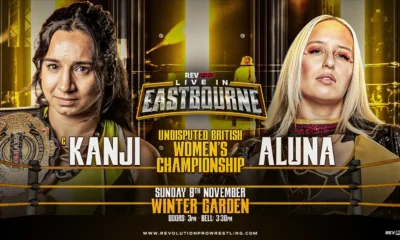

RevPro Live In Eastbourne Results (11/8/2026)
Full RevPro Live In Eastbourne results from November 8, 2026, featuring Kanji, Rich Swann, Cameron Khai, Michael Oku and more.


Mitchell’s WWE Raw Results & Report! (11/9/26)
Greenville is Raw!

Today In Pro Wrestling History: November 9th
From the 1997 Montreal Screwjob & TNA 2008 classics to EVOLVE’s 2009 launch, AEW Full Gear 2019, and MLW Lucha...

Chairshot Wrestling News Report (11/9/2026): Tiffany Stratton Cashes In, Roman Reigns Triumphs & AEW Crowns New Champion
Tiffany Stratton cashes in at Crown Jewel, Roman Reigns defeats Sami Zayn, Tommaso Ciampa wins AEW gold, and four titles...