Sports Entertainment
Chairshot Top 5: Wrestlers Who Competed Under the Most Different Names
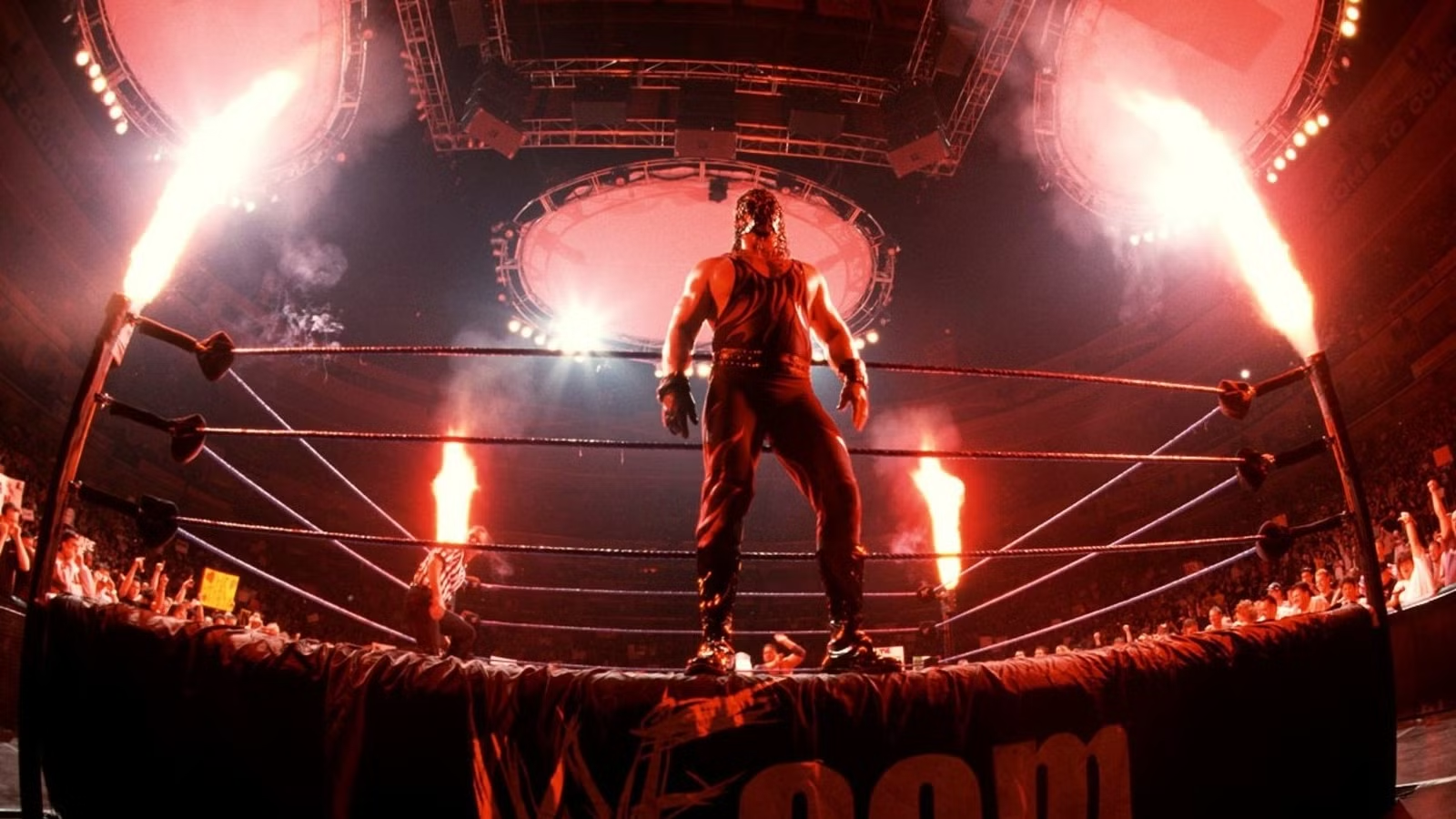
From Kane and Goldust to Repo Man and Brutus Beefcake, these wrestlers competed under an unbelievable number of different names and gimmicks.

From Kane and Goldust to Repo Man and Brutus Beefcake, these wrestlers competed under an unbelievable number of different names and gimmicks.
Some wrestlers find the right name immediately. Others spend years cycling through gimmicks, promotions and complete reinventions before one identity finally sticks. These five careers prove just how many different people one wrestler can become.
A wrestling name can define an entire career. Steve Austin sounds inevitable now, but WWE once considered names like Ice Dagger and Chilly McFreeze before “Stone Cold” became one of the most recognizable identities in wrestling history. The Undertaker sounds equally permanent, even though Mark Calaway had already worked under several names before WWE created the character that would define him for the next three decades.
Most wrestlers eventually settle into one identity, but others never stop changing. Sometimes the changes come from necessity because a wrestler moves between promotions, loses the rights to a previous gimmick or gets handed something completely different by a new creative team. Other times, reinvention becomes part of the performer’s career, with each new name representing a genuinely different character rather than a cosmetic adjustment.
For this ranking, minor spelling changes, nicknames and simple additions do not carry much weight. The strongest candidates are wrestlers who repeatedly became someone else, whether that meant changing appearance, personality, presentation or even their entire fictional background.
These are the Top 5 wrestlers who competed under the most different names.
#5 — Mick Foley
Mick Foley is unusual because three of his most famous names became so important that WWE eventually treated them as separate people. Cactus Jack came first as Foley’s most violent and straightforward wrestling identity, developing across promotions including WCW and ECW and becoming synonymous with his willingness to absorb punishment that most wrestlers would avoid entirely.
By the time Foley arrived in WWE in 1996, fans who followed wrestling outside the company already knew Cactus Jack, but WWE gave him something completely different. Mankind debuted as a masked, unstable character who lived in boiler rooms and attacked opponents with the Mandible Claw. The presentation was darker, stranger and more psychologically disturbing than Cactus Jack, allowing Foley to create a completely different identity without changing the physical performer underneath.
Then came Dude Love, a character that originated in Foley’s childhood imagination and returned as an intentionally ridiculous contrast to Mankind. Tie-dye, dancing and exaggerated cool replaced the mask and darkness, giving Foley three established personas he could switch between depending on the story.
WWE pushed the concept to its logical extreme during the 1998 Royal Rumble, when Foley entered three separate times. Cactus Jack entered at No. 1, Mankind appeared at No. 16 and Dude Love arrived at No. 28, making Foley the first wrestler to compete in the same Royal Rumble under three different identities.
Few wrestlers can claim a name change became part of an actual match statistic. Foley stays at No. 5 because the total number is lower than the wrestlers above him, but the distinctiveness of the three personas makes his case stronger than the raw count suggests.
Fans did not merely call Mick Foley by three names. They genuinely understood Cactus Jack, Mankind and Dude Love as three different versions of the same man.
#4 — Glenn Jacobs
Before Glenn Jacobs became Kane, WWE spent several years proving that a nearly seven-foot wrestler could still be surprisingly difficult to figure out. Jacobs worked outside WWE as Unabomb, including a notable run in Smoky Mountain Wrestling, where he was presented as a straightforward powerhouse.
Then WWE turned him into a dentist.
Isaac Yankem, D.D.S. debuted in 1995 as Jerry Lawler’s personal dentist and opponent for Bret Hart. The name was a dental pun, the presentation leaned heavily into the profession and Jacobs even wrestled in gear designed to make the gimmick unmistakable.
It did not last, and WWE repackaged Jacobs again in 1996 as the replacement Diesel after Kevin Nash left for WCW. Rick Bognar became the new Razor Ramon while Jacobs played Diesel, creating one of the strangest identity substitutions in company history.
Then everything finally clicked.
Kane debuted at Badd Blood in 1997 and immediately erased nearly everything that came before him. The mask, fire, red-and-black gear and storyline connection to The Undertaker transformed Jacobs into one of the most recognizable characters WWE ever created.
The success of Kane makes the earlier names feel even more bizarre in retrospect. Unabomb was a large wrestler trying to establish himself, Isaac Yankem was a dentist and Diesel was someone else’s character. Kane became a mythology.
That progression is one of wrestling’s clearest examples of why the right name and presentation matter more than simply having size and talent.
#3 — Dustin Rhodes
Dustin Rhodes has spent much of his career proving that the same wrestler can move between recognizable family identity and complete character transformation. Early in his career, he wrestled primarily as Dustin Rhodes and later became known as “The Natural” in WCW, emphasizing his wrestling ability and connection to Dusty Rhodes without attempting to hide who he was.
Then WWE created Goldust.
The character debuted in 1995 and changed virtually everything. Gold face paint, platinum wigs, elaborate robes and intentionally unsettling behavior turned Dustin into one of the most visually distinctive performers of the decade.
Goldust became so successful that the identity followed Rhodes across multiple WWE runs, but leaving WWE did not stop the reinvention. When Rhodes returned to WCW in 1999, the company introduced Seven, a supernatural-looking character with white face paint, dark contact lenses and eerie vignettes.
The gimmick was abandoned almost immediately, with Rhodes effectively rejecting it during the television debut, but that did not end the character changes. Rhodes later appeared in TNA as Black Reign, adopting dark face paint and another disturbed persona that again looked nothing like either Dustin Rhodes or Goldust.
Over the course of his career, fans saw Dustin Rhodes, “The Natural,” Goldust, Seven and Black Reign, along with transitional variations that blurred the lines between them. What makes Rhodes different from many wrestlers with multiple names is how dramatically the appearance changed each time.
Goldust alone would have been enough reinvention for most careers. Dustin managed to leave that character, become something else entirely and eventually return to his own name without losing the history attached to any of them.
#2 — Barry Darsow
Barry Darsow had the kind of wrestling career where changing promotions often meant changing identities completely. One of his earliest major personas was Krusher Khruschev, a Soviet sympathizer who became part of wrestling’s long tradition of Cold War villains and gave Darsow a recognizable role before his career took another major turn.
Then he became Smash.
As one-half of Demolition alongside Ax, Darsow became part of one of WWE’s most dominant tag teams of the late 1980s. The face paint, black leather and aggressive presentation created an identity so successful that Smash alone could have defined his career.
WWE later tried something completely different with Repo Man, a sneering, trench coat-wearing character obsessed with repossessing other people’s property. The gimmick was cartoonish even by early-1990s WWE standards, yet Darsow committed enough to make the presentation memorable.
WCW added more names to the résumé. He became The Blacktop Bully, a rougher character involved in the infamous King of the Road match against Dustin Rhodes, and later wrestled under golf-themed variations including Mr. Hole-in-One and Stewart Pain.
WWE itself has described Darsow as “a man of many identities,” which might actually undersell the point. Krusher Khruschev, Smash, Repo Man and Blacktop Bully do not look like chapters of the same character so much as four unrelated wrestlers who happened to share a body.
That versatility kept Darsow employed across changing wrestling eras, even if none of the later names approached the success of Smash.
#1 — Brutus Beefcake
Nobody on this list changed names with the frequency and theatrical enthusiasm of Ed Leslie. Most fans remember him as Brutus “The Barber” Beefcake, but that identity represents only one portion of an unusually crowded résumé.
Beefcake initially became a major WWE star as part of The Dream Team with Greg Valentine. After WrestleMania III, helping Roddy Piper cut Adrian Adonis’ hair led to the Barber persona, which became the version most fans remember.
Then he went to WCW, and the names started multiplying.
He appeared as Brother Bruti, then The Butcher. He became part of the Dungeon of Doom as Zodiac, wearing face paint and communicating with repeated “yes” and “no” outbursts.
After that came The Man With No Name, then The Booty Man, and later The Disciple, serving as a heavily bearded follower of Hollywood Hogan during the nWo era. WWE’s own retrospective on the Dungeon of Doom jokes that Beefcake accumulated a “character actor’s résumé” of personas, and that description fits perfectly.
The remarkable part is how little continuity existed between them. Brutus Beefcake carried giant scissors and cut hair, The Butcher turned against Hulk Hogan, Zodiac looked like a face-painted lunatic, The Booty Man leaned into comedy and The Disciple was presented as a serious nWo enforcer.
Each new identity essentially asked fans to forget the previous one, which makes Leslie the clear No. 1. Plenty of wrestlers changed their names when they switched promotions, but Brutus Beefcake seemed capable of changing his name every time creative needed a new direction.
Honorable Mention — Al Snow
Al Snow deserves the Honorable Mention because his career included several attempts to create a character before he finally discovered that being Al Snow was the answer. Before ECW turned him into one of the promotion’s most popular stars, Snow passed through WWE under multiple identities.
He appeared as Avatar, wearing a mask on the way to the ring before removing it to wrestle, and later became Leif Cassidy as part of The New Rockers alongside Marty Jannetty. Snow also worked under the masked Shinobi identity during a storyline involving Jannetty.
None of those names connected the way Al Snow eventually did.
After leaving WWE and reinventing himself in ECW, Snow developed the unstable character who carried a mannequin head and treated it as though it were speaking to him. The act became enormously popular, with ECW crowds filling arenas with Styrofoam heads while chanting along with his entrance.
The irony is perfect. After several names, masks and gimmicks, the identity that finally worked was essentially his own wrestling name combined with one mannequin head and a deeply strange personality.
Sometimes reinvention requires another character. Sometimes it requires abandoning them.
Professional wrestling depends on presentation, which makes a name much more important than a label printed on a graphic. Mick Foley demonstrated that three different identities could coexist so successfully that WWE allowed all of them into the same Royal Rumble, while Glenn Jacobs survived a dentist and a fake Diesel before Kane permanently changed his career.
Dustin Rhodes repeatedly moved between his own family identity and characters that seemed designed to hide it entirely. Barry Darsow accumulated enough unrelated personas to fill several different wrestling résumés, proving that reinvention could become almost as much a part of a career as championships or signature moves.
Brutus Beefcake took that idea furthest. His career became a running experiment in reinvention, particularly during his WCW years, where one gimmick seemed to arrive before the previous one had fully disappeared.
Some wrestlers become legends because they find the perfect name. Others become memorable because promoters keep trying until something works.
Research included archival material from WWE.com covering Mick Foley’s three Royal Rumble identities, Glenn Jacobs’ pre-Kane WWE characters, Dustin Rhodes’ transformations into Goldust and Seven, Barry Darsow’s many personas and Brutus Beefcake’s extensive WCW reinventions.
Chairshot Radio Network
Launched in 2017, the Chairshot Radio Network presents you with the best in sports, entertainment, and sports entertainment. Wrestling and wrestling crossover podcasts + the most interesting content + the most engaging hosts = the most entertaining podcasts you’ll find!
MONDAY - Bandwagon Nerds
TUESDAY - 4 Corners Podcast
WEDNESDAY - The Grown Ass Man Podcast
THURSDAY - The Benchwarmers Trivia Podcast
FRIDAY - DWI Podcast (Drunk Wrestling Intellect)
SATURDAY - The Mindless Wrestling Podcast
SUNDAY - 30 Mindless Minutes
CHAIRSHOT RADIO NETWORK PODCAST SPECIALS
Attitude Of Aggression Podcast: The Big Five Project (chronologically exploring WWE's PPV/PLE history) Unidentified History (Ufology) & Game Gone Wrong (Game of Thrones Universe)
Chairshot Radio Network Your home for the hardest hitting podcasts... Sports, Entertainment and Sports Entertainment!
Powered by RedCircle
Let us know what you think on social media @ChairshotMedia and always remember to use the hashtag #UseYourHead!


Chairshot NFL News Report (11/22/2026): Cowboys Lose Bland, Eagles Hit Hard & Jones Draws Interest
Dallas loses DaRon Bland, Philadelphia places two starters on IR, Daniel Jones draws interest, and Detroit suffers another offensive-line setback.

Chairshot NFL News Report (11/21/2026): Colts Cut Daniel Jones, Maye’s Season in Jeopardy & Nacua Faces Lengthy Recovery
Indianapolis releases Daniel Jones, Drake Maye faces a lengthy recovery, Puka Nacua undergoes knee surgery, and the Saints part ways...

Chairshot NFL News Report (11/20/2026): Texans Dominate Colts, Nacua Suspended & Ravens Bench Humphrey
Houston crushes Indianapolis on Thursday Night Football, Puka Nacua receives a three-game suspension, and Baltimore benches Marlon Humphrey.


Greg DeMarco’s Top 5 NFL Week 11 Matchups: Vikings-49ers Take Center Stage
Greg DeMarco ranks the five NFL Week 11 matchups that matter most, led by Vikings-49ers, Jaguars-Giants and Buccaneers-Lions.

Chairshot NFL News Report (11/19/2026): Cowboys Shake Up Defense, Eagles Stick With Milton & Injuries Hit Thursday Night Football
Dallas changes defensive play-callers, Philadelphia sticks with Joe Milton, Baker Mayfield misses practice, and injuries hit Colts-Texans.

The Sunday Tunney’s: Thanksgiving, WarGames, and Too Much Good Stuff(ing)
PC Tunney highlights the biggest happenings of the upcoming week in Sports, Entertainment, and WWE!

Bandwagon Nerds News Report (11/22/2026): Hunger Games Soars, Blade Questions, and Blade Runner’s Future
Hunger Games targets a huge opening, Blade’s former director speaks out, and Blade Runner 2099 prepares to expand its sci-fi...


Bandwagon Nerds News Report (11/21/2026): Home Alone Returns, GTA VI Makes History, and Marvel Meets Star Wars
Macaulay Culkin’s Home Alone return takes shape, GTA VI posts massive launch sales, and Marvel’s Star Wars crossover reveals its...

Bandwagon Nerds News Report (11/20/2026): Invincible Returns, Ice Age Heats Up, and GTA VI Goes Big
Invincible sets its return, Ice Age drops a new trailer, GTA VI posts huge sales estimates, and Mayfair Witches heads...

Bandwagon Nerds News Report (11/19/2026): GTA VI Arrives, Spider-Man Returns, and Cliff Booth Gets Dangerous
GTA VI launches with glowing reviews, Spider-Man returns with new scenes, Cliff Booth gets a final trailer, and Magic heads...

Chairshot Top 5: Wrestlers Who Competed Under the Most Different Names
From Kane and Goldust to Repo Man and Brutus Beefcake, these wrestlers competed under an unbelievable number of different names...

Today In Pro Wrestling History: November 22nd
Relive wrestling history: Rikidōzan’s 1955 All Asia title win, Survivor Series 1990, The Miz’s 2010 cash-in, and Lucha Underground’s 'Life...

Chairshot Wrestling News Report (11/22/2026): Daniel Garcia Injured, Jay White Wins, and AAA Teases Kiana James
Daniel Garcia suffers an injury on AEW Collision, Jay White makes a Continental Classic statement, and AAA teases Kiana James'...


Mitchell’s AEW Collision Results & Report! (11/21/26)
There's a Collision in Green Bay!

Andrew’s MLW Fusion Results & Ratings: S8 E28
The last semifinals match has to happen for the Opera Cup! Matt Riddle vs Big Damo, who faces Austin Aries...

Today In Pro Wrestling History: November 21st
Gather for History: WCW Mayhem '99, Eddie Guerrero vs. Billy Gunn on SmackDown '00, Hulkamania '09, and NOAH Cross Over...


Mindless Wrestling Podcast: Survivor Series Trivia
Tune in every week as DJ, Rob and Jason give their thoughts on the world of pro wrestling and beyond!

Chairshot Wrestling News Report (11/21/2026): Trick Williams Out of Team USA, TNA Departures, and Bloodsport Returns
Trick Williams is out of Team USA, Sami Zayn attacks Kevin Owens, TNA confirms two departures, and GCW announces the...


Mitchell’s WWE SmackDown Results & Report! (11/20/26)
Who wins advantage?

Andrew’s JCW Lunacy Results & Ratings: Ep# 108
Caleb Conley demands his rematch for the Lunacy World Title against Nic Nemeth, and Orange Phantom reveals his true identity!