Uncategorized
Chairshot Top 5: Wrestlers Who Had Surprisingly Short WWE Careers
Sting, Diesel, Razor Ramon and other major stars left huge WWE legacies despite spending surprisingly little time with the company.

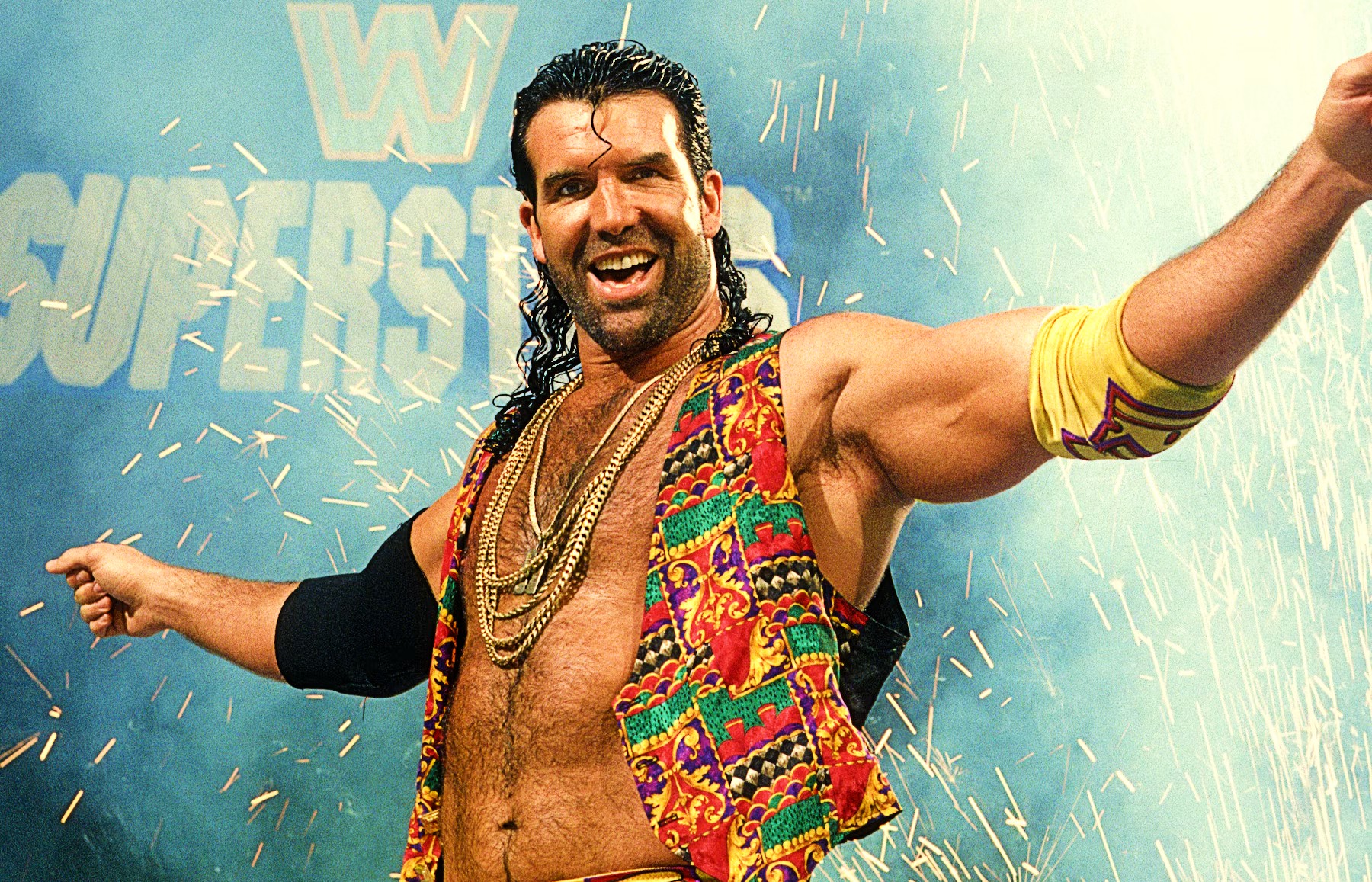
Sting, Diesel, Razor Ramon and other major stars left huge WWE legacies despite spending surprisingly little time with the company.
Some wrestlers become so closely associated with WWE history that it feels like they must have spent a decade there. In reality, several Hall of Famers, world champions and era-defining stars made their biggest WWE impact during surprisingly brief runs.
Longevity can distort wrestling memory. The longer a performer remains famous, the easier it becomes to assume that fame came from spending years and years inside WWE.
That is not always how it works.
Some wrestlers accomplished an extraordinary amount during relatively short stays. They won championships, headlined major events and created moments that WWE continued replaying long after the performer had moved somewhere else. Others arrived late in their careers and had barely enough time to create a WWE chapter before injuries or retirement ended it.
For this ranking, the focus is primarily on a wrestler’s meaningful full-time WWE career rather than every isolated return, Royal Rumble appearance or nostalgia match that may have happened years later. That distinction becomes important for people like Kevin Nash and Scott Hall, whose brief later appearances do not change how compact their original WWE runs actually were.
The surprise factor matters just as much as the calendar. A wrestler spending three or four years in WWE is not inherently remarkable, but it becomes much more interesting when those few years produced multiple championships, a WrestleMania classic or an identity permanently associated with the company.
These are the Top 5 wrestlers who had surprisingly short WWE careers.
#5 — Yokozuna
Yokozuna feels like one of the defining monsters of WWE’s New Generation era because nearly everything important happened to him in rapid succession.
He debuted in WWE in 1992 with Mr. Fuji and immediately looked unlike anyone else on the roster. Within months, Yokozuna had won the 1993 Royal Rumble and earned a WWE Championship match against Bret Hart at WrestleMania IX.
He defeated Hart for the championship, lost it almost immediately to Hulk Hogan, then defeated Hogan two months later to reclaim it. Yokozuna’s second reign lasted until WrestleMania X, giving him major programs against Lex Luger, The Undertaker and Hart while establishing him as one of WWE’s most protected heels.
That amount of history makes it easy to imagine Yokozuna dominating WWE for most of the decade.
His meaningful run lasted only about four years.
By 1996, significant weight issues were limiting what WWE could do with him. Yokozuna still appeared periodically and even participated at Survivor Series that November, but the performer who had been WWE’s dominant champion only a few years earlier was already reaching the end of his time with the company.
The brevity becomes more striking when looking at how much imagery he left behind. The Banzai Drop, the Japanese presentation, Mr. Fuji waving the flag, the Royal Rumble victory and the WrestleMania championship matches all became permanent pieces of WWE’s early-1990s history.
Yokozuna did not need ten years to become unforgettable. Roughly four years were enough to make him a two-time WWE Champion, Royal Rumble winner and eventual Hall of Famer.
#4 — Razor Ramon
Razor Ramon feels like someone who spent most of the 1990s in WWE because his fingerprints are all over the New Generation.
Scott Hall arrived in 1992 after earlier runs elsewhere, including WCW as The Diamond Studd. WWE transformed him into Razor Ramon, an effortlessly cool heel inspired partly by cinematic gangster characters, and the presentation worked almost immediately.
Within months, Razor was challenging Bret Hart for the WWE Championship at the 1993 Royal Rumble. He soon became one of WWE’s most dependable upper-card performers and eventually captured the Intercontinental Championship four times.
Then came WrestleMania X.
Razor Ramon and Shawn Michaels turned the Ladder Match into a mainstream WWE attraction, producing one of the most celebrated matches of the decade and permanently tying Razor to WrestleMania history. Their SummerSlam 1995 rematch reinforced the connection.
It feels like the résumé of someone who spent a very long time in WWE.
Razor’s original run lasted from 1992 until the spring of 1996.
Hall left immediately after the infamous Madison Square Garden Curtain Call and appeared on WCW Monday Nitro on May 27, beginning the sequence that eventually produced the New World Order and transformed the wrestling industry.
He returned to WWE with the nWo in 2002, but that comeback lasted only a few months and never became a significant second chapter.
That means nearly everything fans associate with Razor Ramon happened during roughly four years. The gold chains, toothpick, Ladder Match, Intercontinental Championships and Bad Guy persona all became permanent WWE iconography despite the character disappearing before the Attitude Era had even truly begun.
Razor Ramon feels like a WWE lifer because the character never really stopped being famous.
The actual run was remarkably compact.
#3 — Diesel
Kevin Nash may have accomplished more in less time than almost anyone WWE pushed during the 1990s.
He arrived in 1993 as Shawn Michaels’ bodyguard, initially serving as an intimidating supporting character rather than a wrestler positioned to become the face of the company. Within a year, that role had changed dramatically.
Diesel dominated the 1994 Royal Rumble with a performance that turned him into a major crowd favorite. He captured the Intercontinental Championship, won the Tag Team Championship with Michaels and then defeated Bob Backlund in eight seconds at Madison Square Garden to become WWE Champion.
All of that happened within roughly eighteen months of his debut.
Diesel then held the WWE Championship for nearly a full year, defending against Michaels, Sid and Mabel before losing the title to Bret Hart at Survivor Series 1995. By that point, Nash had gone from bodyguard to WWE’s longest-reigning champion of the decade.
A few months later, he was gone.
Nash left WWE in the spring of 1996, joining Scott Hall in WCW and eventually forming the nWo with Hulk Hogan. His departure became more historically important than many championship changes because it helped trigger the hottest period of the Monday Night War.
The original Diesel run lasted only about three years.
Nash eventually returned to WWE in 2002 as part of the nWo and made sporadic appearances years later, but those later chapters never approached the importance of his first tenure.
That makes Diesel’s résumé almost absurdly compressed. WWE introduced him, made him Intercontinental Champion, Tag Team Champion and WWE Champion, positioned him as one of the company’s central stars and lost him to its biggest competitor in the span of roughly three years.
Some wrestlers spend longer than that trying to reach the main event.
Diesel arrived, reached it and left.
#2 — Diamond Dallas Page
Diamond Dallas Page arrived in WWE with one of the strongest résumés available after WCW closed.
Then his entire full-time WWE career lasted roughly a year.
DDP had been one of WCW’s genuine homegrown success stories, developing from manager and late-blooming wrestler into a three-time WCW World Heavyweight Champion. By the end of the 1990s, the Diamond Cutter, self-high-five and unmistakable personality had made him one of the company’s most recognizable stars.
When WCW disappeared in 2001, Page eventually became one of the most prominent names to join WWE during the Invasion.
His introduction immediately placed him opposite The Undertaker, but the storyline came with a major character change. DDP was revealed as the person stalking Undertaker’s wife, Sara, transforming a charismatic WCW babyface into an obsessive heel whose motivation never quite matched the performer fans already knew.
The rivalry went badly for Page, and his position declined quickly afterward.
WWE eventually reinvented him as an aggressively positive motivational speaker, allowing more of his natural charisma to return. He defeated Christian for the European Championship and even successfully defended it at WrestleMania X8.
By 2002, however, neck problems brought the run to an end.
WWE’s own biography notes that Page retired from full-time competition later that year, meaning one of WCW’s biggest stars essentially received only a single WWE season to establish himself.
That short stay helps explain why DDP’s WWE run feels more like an unusual epilogue than a true second act. His WCW career created the legacy, while WWE provided a handful of moments that never had enough time to redefine it.
Considering how prominent he had been only a few years earlier, it remains remarkable that Diamond Dallas Page’s full-time WWE career was over almost as soon as it began.
Honorable Mention — Goldberg
Goldberg’s WWE history feels much longer today because his second run stretched across several years of occasional appearances.
His original tenure was almost shockingly brief.
After WCW closed in 2001, Goldberg remained one of the biggest stars WWE had yet to sign. Fans waited two years before he finally appeared on Raw on March 31, 2003 and immediately Speared The Rock.
WWE spent the following year running through nearly every obvious attraction.
Goldberg defeated Rock at Backlash, feuded with Chris Jericho and entered the World Heavyweight Championship picture against Triple H. He eventually defeated Triple H at Unforgiven to win the title and carried it until Armageddon.
By WrestleMania XX in March 2004, he was leaving.
Goldberg defeated Brock Lesnar in a notorious match where the Madison Square Garden crowd knew both wrestlers were departing. His first WWE run had lasted less than twelve months from television debut to final match.
That would have been the entire story if Goldberg had never returned.
Instead, he came back in 2016 after twelve years away and created an entirely different WWE chapter, including a shocking victory over Lesnar and multiple Universal Championship reigns.
Those later appearances keep him out of the main ranking because his total WWE history is no longer especially brief.
The original run still qualifies as one of the most compressed superstar tenures WWE has ever had. Goldberg arrived, wrestled The Rock, became World Heavyweight Champion, faced Brock Lesnar at WrestleMania and left within one year.
#1 — Sting
Fans waited more than a decade after WCW closed to see Sting inside WWE.
Once he finally arrived, his active WWE career lasted only sixteen months.
That may be the most extreme gap between anticipation and actual tenure in company history.
Sting had been WCW’s franchise star, remaining with the promotion through the final episode of Nitro in March 2001. While almost every other major WCW name eventually appeared in WWE, Sting continued wrestling elsewhere and became the most famous holdout from the Monday Night War.
That changed at Survivor Series 2014.
Sting appeared during the main event between Team Cena and Team Authority, confronted Triple H and helped Dolph Ziggler secure the victory that temporarily removed The Authority from power.
Years of speculation had finally ended.
The WrestleMania match everyone expected was not Sting against The Undertaker, however. WWE instead built toward Sting versus Triple H at WrestleMania 31, framing the rivalry around the history between WWE and WCW.
Triple H won.
Sting later returned to challenge Seth Rollins for the WWE World Heavyweight Championship at Night of Champions 2015. During that match, Sting suffered a serious neck injury after taking a turnbuckle powerbomb, bringing his active WWE career to an abrupt end.
WWE itself later described his run as lasting only 16 months.
That number is remarkable considering how important Sting felt to wrestling history before he ever arrived. He had spent years as the theoretical final piece of WCW that WWE had never acquired, and fantasy matches involving The Undertaker had become almost annual WrestleMania speculation.
When the opportunity finally happened, there simply was not much time left.
Sting made his WWE debut at 55 years old. He participated in only a handful of actual WWE matches, lost his two major pay-per-view singles bouts and was forced out of action by injury before several obvious dream matches could happen.
Even so, his WWE appearances remain memorable because the arrival itself carried so much history.
The image of Sting finally standing across from Triple H mattered before either man did anything. The fact that WWE had finally secured WCW’s most enduring icon was enough to make Survivor Series feel historic.
That is what makes Sting the clearest No. 1.
The wait lasted thirteen years after WCW disappeared.
The active WWE career barely lasted one.
A long wrestling career provides more opportunities to accumulate championships, matches and memorable stories, but longevity does not automatically create importance.
Yokozuna needed only a few years to become one of WWE’s defining super-heavyweights. Razor Ramon never won the WWE Championship and was gone after roughly four years, yet his character and Ladder Matches remain essential pieces of the New Generation.
Diesel compressed an entire franchise-player run into approximately three years, while Diamond Dallas Page experienced the opposite problem. He arrived after most of his legacy had already been created and barely received enough WWE time to establish a second version of himself.
Sting may be the strangest example because his WWE career was anticipated for much longer than it actually existed.
Fans spent years wondering whether he would ever appear, imagining matches against The Undertaker and other WWE icons while Sting remained associated almost entirely with WCW.
Then he finally arrived.
Sixteen months later, it was essentially over.
That is one of wrestling history’s stranger reminders that the size of a legacy and the length of a career are not always connected.
Sometimes a few years are enough to make someone feel permanent.
Research included archival and biographical material from WWE.com covering Sting’s 16-month WWE run, Diamond Dallas Page’s 2001–02 tenure, Kevin Nash’s original run as Diesel, Scott Hall’s years as Razor Ramon, Yokozuna’s New Generation career and Goldberg’s original 2003–04 WWE run.
Chairshot Radio Network
Launched in 2017, the Chairshot Radio Network presents you with the best in sports, entertainment, and sports entertainment. Wrestling and wrestling crossover podcasts + the most interesting content + the most engaging hosts = the most entertaining podcasts you’ll find!
MONDAY - Bandwagon Nerds
TUESDAY - 4 Corners Podcast
WEDNESDAY - The Grown Ass Man Podcast
THURSDAY - The Benchwarmers Trivia Podcast
FRIDAY - DWI Podcast (Drunk Wrestling Intellect)
SATURDAY - The Mindless Wrestling Podcast
SUNDAY - 30 Mindless Minutes
CHAIRSHOT RADIO NETWORK PODCAST SPECIALS
Attitude Of Aggression Podcast: The Big Five Project (chronologically exploring WWE's PPV/PLE history) Unidentified History (Ufology) & Game Gone Wrong (Game of Thrones Universe)
Chairshot Radio Network Your home for the hardest hitting podcasts... Sports, Entertainment and Sports Entertainment!
Powered by RedCircle
Let us know what you think on social media @ChairshotMedia and always remember to use the hashtag #UseYourHead!



4 Corners Podcast: Milwaukee’s Best!
The 4 Corners Podcast is back as PC Tunney celebrates the Brewers winning the World Series, while college football continues...

Chairshot NFL News Report (10/30/2026): Bears Land Jeffery Simmons, Packers Beat Panthers & A.J. Brown Faces Injury Setback
Chicago trades two first-round picks for Jeffery Simmons, Green Bay defeats Carolina, and A.J. Brown faces another injury setback.

Greg DeMarco’s Top 5 NFL Week 8 Matchups
Greg DeMarco ranks the five NFL Week 8 matchups that matter most, led by Vikings-Lions, Bears-Seahawks and Chiefs-Broncos.

Chairshot NFL News Report (10/29/2026): Josh Downs Wants Out, Chiefs Sign Justin Tucker & McLaurin’s Season Ends
Josh Downs requests a trade from Indianapolis, Kansas City signs Justin Tucker, and Washington loses Terry McLaurin for the season.

Greg DeMarco’s NFL Power Rankings – Week 7
The Vikings take over No. 1 in Greg DeMarco's Week 7 NFL Power Rankings, while the Bengals, Seahawks and Buccaneers...

Bandwagon Nerds News Report (11/3/2026): Criminal Minds Ends, Percy Jackson Goes to War & Persona Leaks
Criminal Minds prepares to end after 20 seasons, Percy Jackson goes to war and leaked footage may reveal Atlus’ next...
Bandwagon Nerds #365: Live Long and Prosper
Bandwagon Nerds talks Vision Quest, the final trailer for Dune 3, and pays our respects to Sir Patrick Stewart.


30 Mindless Minutes: Couples Therapy – Welcome to Rockville 2027!
Take your mind off of things, for 30 minutes.

Bandwagon Nerds News Report (10/30/2026): Patrick Stewart Dies, PUBG Gets Glover & Duskbloods Slips
Patrick Stewart dies at 86, Donald Glover takes on PUBG for Netflix and FromSoftware delays The Duskbloods into 2027.

Bandwagon Nerds News Report (10/29/2026): Hunger Games Rises, Smile Finds Bruckner & Witchbrook Gets Its Date
Sunrise on the Reaping earns strong first reactions, Smile 3 lands David Bruckner and Nintendo finally dates Witchbrook.


Chairshot Top 5: Wrestlers Who Had Surprisingly Short WWE Careers
Sting, Diesel, Razor Ramon and other major stars left huge WWE legacies despite spending surprisingly little time with the company.

Today In Pro Wrestling History: November 3rd
From Nitro '97 & IWGP battles in '03 to HustleMania, Raw '08, and Dragon Gate 2020, we track today's historic...

Chairshot Wrestling News Report (11/3/2026): Ethan Page Wins Gold, CM Punk Targets NXT & Cena Classic Revealed
Ethan Page wins the Intercontinental Title, CM Punk challenges Grayson Waller, John Cena unveils his Classic, and AEW finalizes Blood...

Chairshot NFL News Report (11/3/2026): Bears Dominate Seahawks, Vikings Fall & Broncos Stun Chiefs
Chicago beats Seattle behind D'Andre Swift, Detroit ends Minnesota's perfect season, and Denver rallies past Kansas City in a wild...


Mitchell’s WWE Raw Results & Report! (11/2/26)
Look who's back!

Today In Pro Wrestling History: November 2nd
From 1998’s WWF Raw to Crown Jewel 2024, explore the wild history of DDT Day Dream Believer, SmackDown’s Tough Enough,...

Today In Pro Wrestling History: November 1st
From Raw 2004 & Total Nonstop Deletion to NXT's 2019 takeover, CMLL's Dia de Muertos, and SNME 2025—relive the iconic...

Mitchell’s AEW Collision Results & Report! (10/31/26)
The scariest Collision ever!


Mitchell’s WWE Halloween Havoc Results & Report! (10/31/26)
Time to wreak Halloween Havoc!

Andrew’s MLW Fusion Results & Ratings: S8 E25
Two Opera Cup matches, some lead in for SuperFight and Zamaya actually speaks! Looks like she's just making enemies everywhere!